






















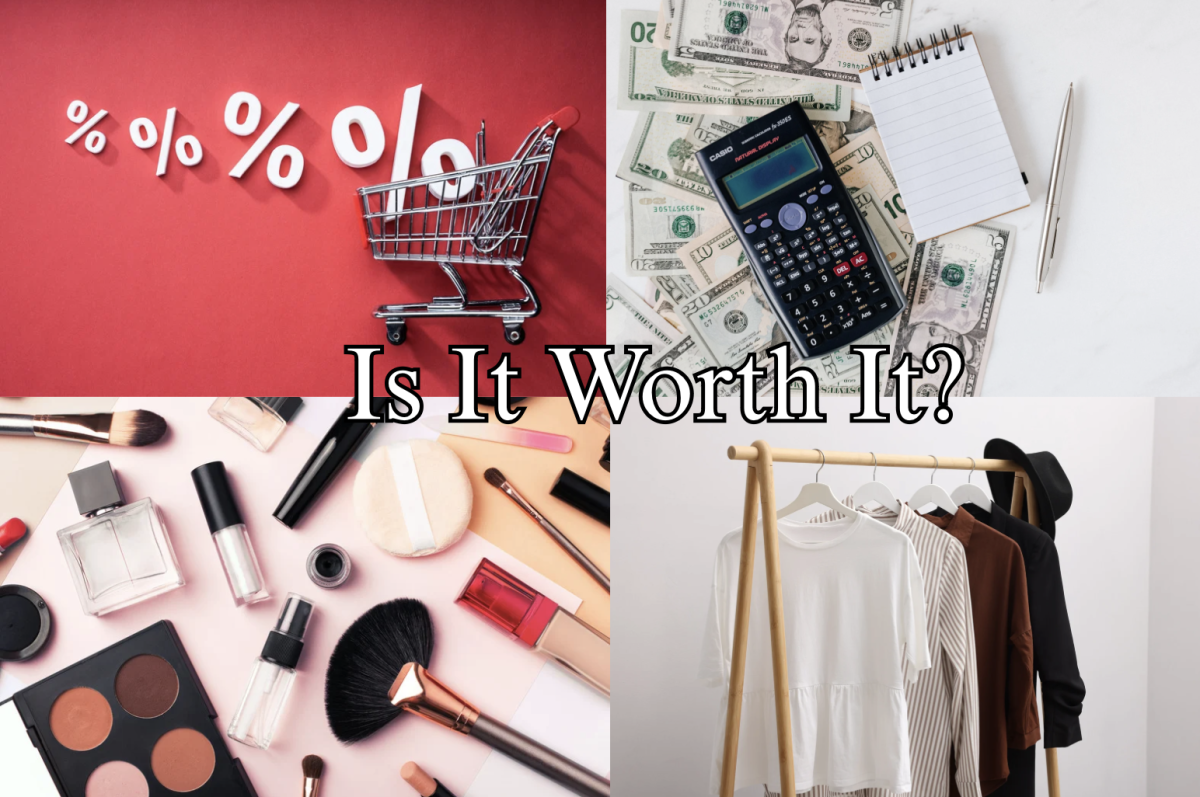
Every brand, whether for universal days like Black Friday or niche brand-specific reasons, has a massive sale at least once a year. Sometimes only overstocked or underselling products are on sale, and other times the entire store is on sale. The real question is if it’s worth it and as a consumer, are you really saving?
Firstly, it is important to understand the psychology behind sales as the consumer. According to The National, spending money sends a boost of dopamine to the brain. Furthermore, the illusion of saving, or the feeling of getting a deal in general, provides immediate satisfaction. Renata Padilla (9) mentioned how “getting any sort of deal is typically the deciding factor for me to buy something; even a few dollars off will make me want to buy the item now instead of waiting and missing out on the sale.” Speaking of, the fear of missing out is a major part of the psychology behind sales. With social media, many influencers and creators will make videos recommending products they enjoy during massive sales. For example, during the recent Sephora sale, feeds were filled with videos of creators’ top products, which makes consumers feel like they are missing out if they don’t participate.
This leads into the next part of the marketing and selling techniques businesses use to give the illusion that they are giving massive discounts when they really aren’t. Going back to the Sephora sale, customers had to have certain levels of membership for different amounts off. These levels could be achieved by spending more money. For example, Insiders is the beginning level, which is technically free but only gets 10% off. VIB is the second level, which requires spending at least $350 yearly to get 15% off during annual sales. Lastly, Rouge is $1000 yearly for 20% off. In reality, in order to reach the discount that would be worth it, customers have to spend absurd amounts that are likely more than what they are saving. Although this is more Sephora specific, one technique that stores nationwide utilize is marking up prices and then giving a large discount off. In the end, the price is the same as it was before, but seeing a percentage marked off gives that illusion to customers that convinces them to purchase.
So, going back to the essential question, is it worth it? Although this is really individual to every person, there is one simple guideline to follow that helps make the most out of the sale: be certain that the items are ones you absolutely need or ones you surely want. It is important to make sure you aren’t spending money just because you can, and whatever you are purchasing is something you either have to restock or have wanted for a while. Joyce Yang (10) comments how she “loves sales because at the end of the day I’m saving money, even if it’s a little bit. Plus I try to only buy stuff I don’t already have.” Therefore, sales can be beneficial if purchases are thought out and not excessive.





Carey Yuen • May 21, 2026 at 7:44 AM
my dad always says that sales are just to make you buy things you wouldn’t have bought otherwise. i’m glad you touched on that!