






















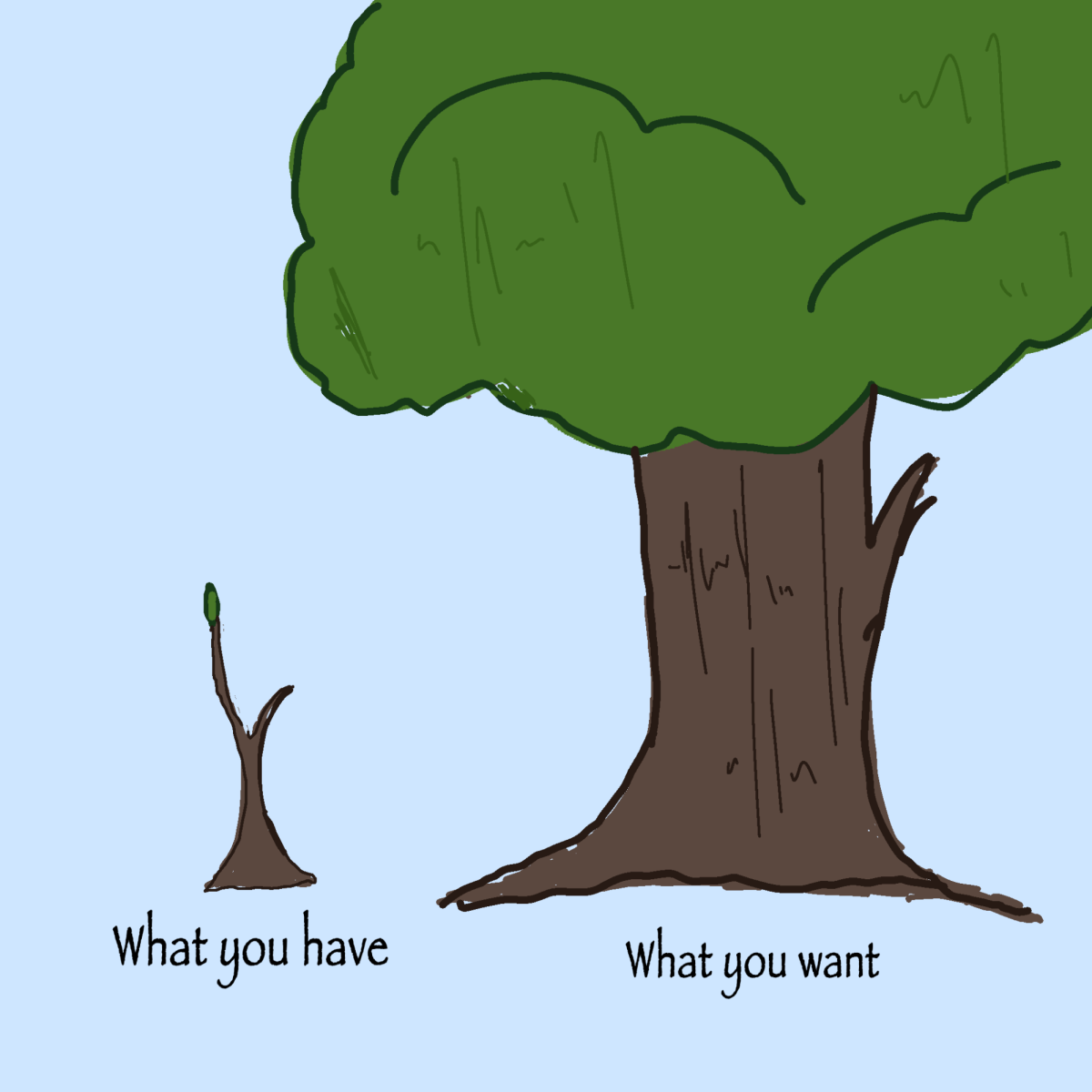
“I wish I had curly hair… I wish I had straight hair.” This is a passing thought, yet it captures something deeply human: We are often drawn to what we do not have, especially when it feels just beyond our reach. In that pursuit, we frequently overlook the value of what is already ours.
At the heart of this tendency lies comparison. We are constantly, often unconsciously, measuring ourselves against the people around us, whether that pertains to our physical appearances, achievements, or lifestyles. When someone else possesses something we lack, our respect for it increases.
Desire is also fueled by rarity. The less accessible something feels, the more valuable it appears. Whether it is an exclusive opportunity, a certain lifestyle, or even a particular version of ourselves, difficulty manifests itself into allure. We begin to believe that if we could just attain that one thing, everything would consequently fall into place. However, when we finally achieve said thing, the satisfaction is often described as unfulfilling. The excitement fades, and our attention shifts once again to what remains out of reach. The cycle continues, not because we lack stability, but because we are instinctively conditioned to keep seeking it elsewhere.
Another reason we gravitate toward what we do not have is our natural attraction to novelty. Newness carries a sense of excitement from the promise of something different, something that might finally satisfy us. Whether it’s a new trend, a new goal, or a new version of ourselves, the unfamiliar feels refreshing to many. Over time, however, even the most exciting changes lose their shine and dissolve into a mundane routine. The constant craving for novelty keeps us looking forward, often at the expense of appreciating what is already present.
Compounding this is our ability to adapt. Instead of pausing to appreciate the achievements, possessions, and personal traits we have already obtained, we keep pushing forward and chasing yet another goal. In doing so, we create a persistent sense of dissatisfaction rooted in inattention.
This mindset has its consequences. It pulls us out of the present by subconsciously taking away our sense of happiness and leaves us with a distant and uncertain headspace. We become so focused on what we are missing and fail to recognize what we already possess, such as personal growth and qualities within ourselves that others might admire. The irony is striking: While we are constantly envying others, they may very well be simultaneously envying us.
Shifting this perspective does not mean abandoning ambition or the desire to improve; rather, it means balancing that drive with awareness. Suriya Patel (11) further adds, “It means learning to see ourselves not as lacking but holding potential and value.” The girl wishing for different hair might one day realize that what she has is not something to fix, but instead something uniquely her own.
Eleni Patel (11) emphasizes, “Living in the moment allows us to fully experience and appreciate what we have, turning ordinary moments into something meaningful rather than letting them slip by unnoticed.” In the end, the unattainable will always hold a certain allure, but fulfillment does not come from endlessly chasing what is just out of reach. It comes from recognizing the things within our reach.