








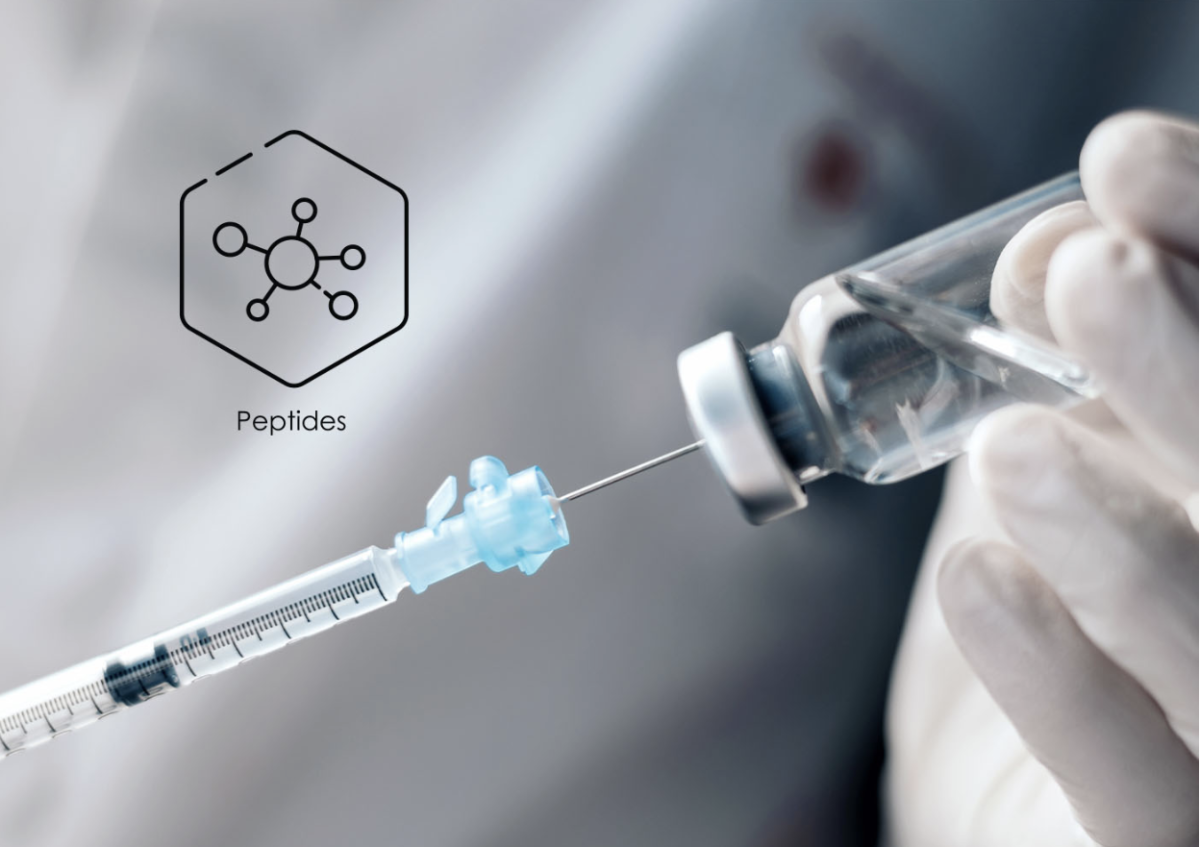
















Peptides are short chains of amino acids ranging from two to fifty that act as building blocks for proteins and function as essential signaling molecules in the body. They are found naturally in foods and body tissues, which perform roles like regulating hormones, supporting immune function, and promoting tissue repair. However, recently, peptides have taken off in the form of medicine and injectables that are promoting muscle growth and progress insanely quickly.
A top peptide that has gained popularity amongst many generations is called retatrutide, which is often referred to as “reta.” This is a triple agonist peptide drug that is designed to treat obesity and type 2 diabetes by acting on GIP, GLP-1, and glucagon receptors. This peptide stimulates weight loss, appetite suppression, and metabolism, and is shown to reduce weight by 24-30% in recent studies. One large risk people should become more aware of is that many peptides, including this one, are not FDA-approved.
Another popular peptide is semaglutide, which is a synthetic GLP-1 receptor agonist peptide that mimics the hormone GLP-1 to regulate blood sugar, increase satiety, and slow gastric emptying. Although it is used for type 2 diabetes, it reduces appetite, slows digestion, and has major weight loss effects, which is what people ultimately use it for. Now, this one is FDA-approved for treating type 2 diabetes and adults with obesity in the range of a BMI > 27kg/m^2.
CJC-1295 is a synthetic, long-acting analog of Growth Hormone-Releasing Hormone (GHRH), which stimulates the pituitary gland to increase the growth hormone and IGF-I levels. This is commonly used for increased lean muscle, fat loss, and improved recovery. This peptide is not FDA-approved for human use, and the FDA has, in fact, raised concerns about the risks associated with the bulk-compounded peptides.
BPC-157 is a synthetic 15-amino acid peptide that is derived from a protein found in human gastric juice. This peptide is being heavily researched for its potential to accelerate the healing process of various tissues, which include the tendons, ligaments, muscles, nerves, and bones. The majority of the research on this peptide has been conducted on animals like rats, mice, and rabbits; therefore, it is not approved by the FDA for human use, and it is banned by the World Anti-Doping Agency. Though the studies that have been conducted have indicated that this peptide works by boosting growth factors, reducing inflammation, and increasing new blood vessel formation.
Another popular peptide is called TB-500, which is a synthetic peptide mimicking a naturally occurring protein that promotes tissue repair, angiogenesis, and cell migration. This peptide is often used for muscle and inflammation, but it is not FDA-approved for human use due to its primary evidence also stemming from animal studies and anecdotal reports. This peptide is often paired with BPC-157, and athlete Tyler Biegler (12) tells us how “after tearing [his] ACL during football season, [he] began using peptides like BPC-157 and TB-500, which is widely known as the ‘wolverine pack’ when pairing these two together. Utilizing peptides substantially helped with my recovery, and I noticed a massive difference.”
MT-2 is a synthetic peptide hormone that is primarily used for skin tanning and increasing libido. It acts by stimulating melanogenesis (tanning) and activating MC4 receptors, leading to sexual effects and potential side effects. This peptide promises a rapid tan without long hours in the sun, but it has serious risks, such as potentially leading to melanoma. Now, as for results, the time frame of which an individual can expect to notice differences varies, but Stevie Braseny (12) tells us he was able to “see results at the two-week mark.” Regarding MT-2, he always says how “UV exposure is not very necessary to tan around 1.5 weeks, and [he] noticed an even tan everywhere around my body, even when it was cloudy and the UV was around 3 or 4. Although I noticed results, I stopped taking this peptide due to the fact that it made some moles and dark spots on my face very dark due to the spike in melanin.” Stevie also informed us that he took a peptide called KLOW, a specialized, multi-peptide blend that is designed to promote skin rejuvenation, tissue repair, and reduce inflammation. Stevie says that when he began taking it, he was able to notice that his “acne scars were noticeably better and gone at around the four-week mark. My face got remarkably smoother around two weeks due to the spike of collagen production, but this injection was every other day Sub-Q injections, unlike MT-2, which was an everyday Sub-Q injection.”
In conclusion, peptides have many benefits, as one could say, yet utilizing peptides can cause many side effects and risks, considering many are yet to be approved by the FDA. There is risk to any medication taken, but peptides are a fast-advancing form of medicine, recovery, and muscle growth injections. Everyone should consult with a specialist or doctor before thinking of taking any medication.







Regina Rodriguez • May 21, 2026 at 7:30 AM
Wow this is crazy and super interesting to learn about!