



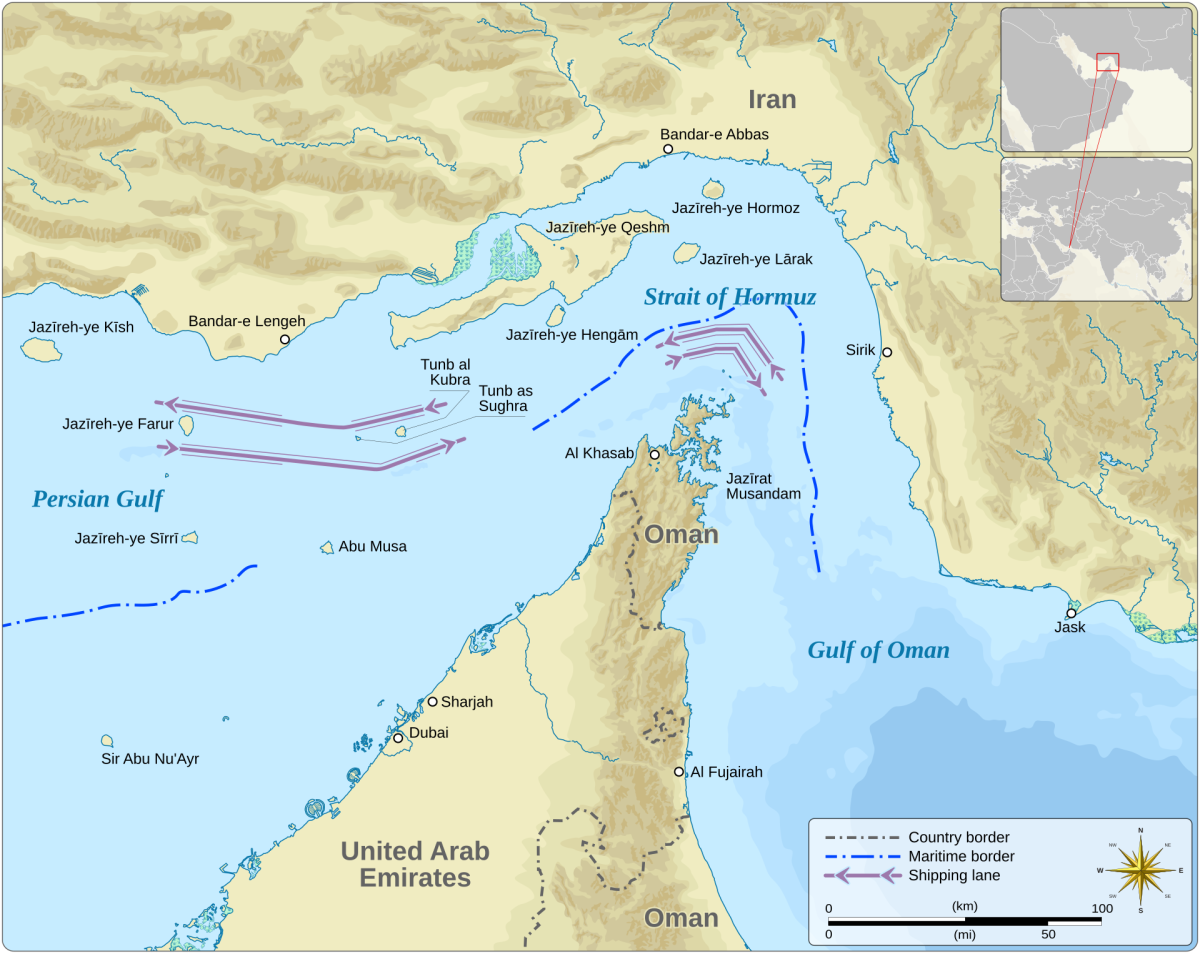

















Strategically centered in between the Persian Gulf and the Gulf of Oman in the middle east, the Strait of Hormuz is known for transporting around 20-30% of the world’s crude oil, around 20% of liquified natural gas (LNG), and 30% of the world’s fertilizer. Oman, Saudi Arabia, the United Arab Emirates, Qatar, and Iran, which controls the vast majority of the strait, all rely on it to transport their goods to the world – primarily to Asia and Europe.
On February 28th, 2026, Iran closed the Strait of Hormuz after being attacked by the United States. Since then, prices of crude oil, LNG, and fertilizer skyrocketed. Countries relying on such commodities face difficult situations for their economy. But what exactly has the closing caused globally?
Firstly, the price of oil has increased so dramatically that it sparked a global jet fuel shortage, and even caused one North America’s most prominent airlines, Spirit Airlines, to completely shut down. Airlines such as Air China and other Asian airlines have been forced to cancel countless flights; so far, around 13,000 flights have been canceled due to the shortage. However, large airlines, such as British Airways, remain largely unaffected and are able to accommodate flights during the summer.
Gas prices have spiked as well, especially in the United States. The national average of the price per gallon of gas rose by 50%, with the national average becoming $4.50. California has been hit the hardest, with prices increasing to over $6.00 per gallon. Elizabeth Horner (10) reflects on the price shift: “I think this will hurt people, in California especially, because we don’t have a strong public transportation network.”
European gas prices spiked as well, with prices climbing to over $2 per liter. To put this amount into perspective, there are around 3.8 liters in a gallon, making the price around $7.50 (USD) per gallon in some European countries. Christina Zhang (10) describes how tension in the middle east tends to cause “energy prices in Asia and Europe to spike,” she continues, “I mostly notice it through inflation and everything becoming more expensive.”
Finally, the fertilizer shortage has caused great turmoil throughout the agricultural industry. While it has made farming more difficult for farmers across the entire globe, the situation is becoming dire in countries who depend on fertilizer during this season, according to a United Nations task force. Moreover, fertilizer is potentially at its highest demand during the year since farmers are beginning to plant crops. A lack thereof is far reaching; while it may cause prices to rise in countries such as the United States and United Kingdom, countries with less bidding power will be impacted the most.
The closing of the Strait of Hormuz has caused numerous interruptions in the supply chain; however, limited amounts of ships are being allowed through once again.