






















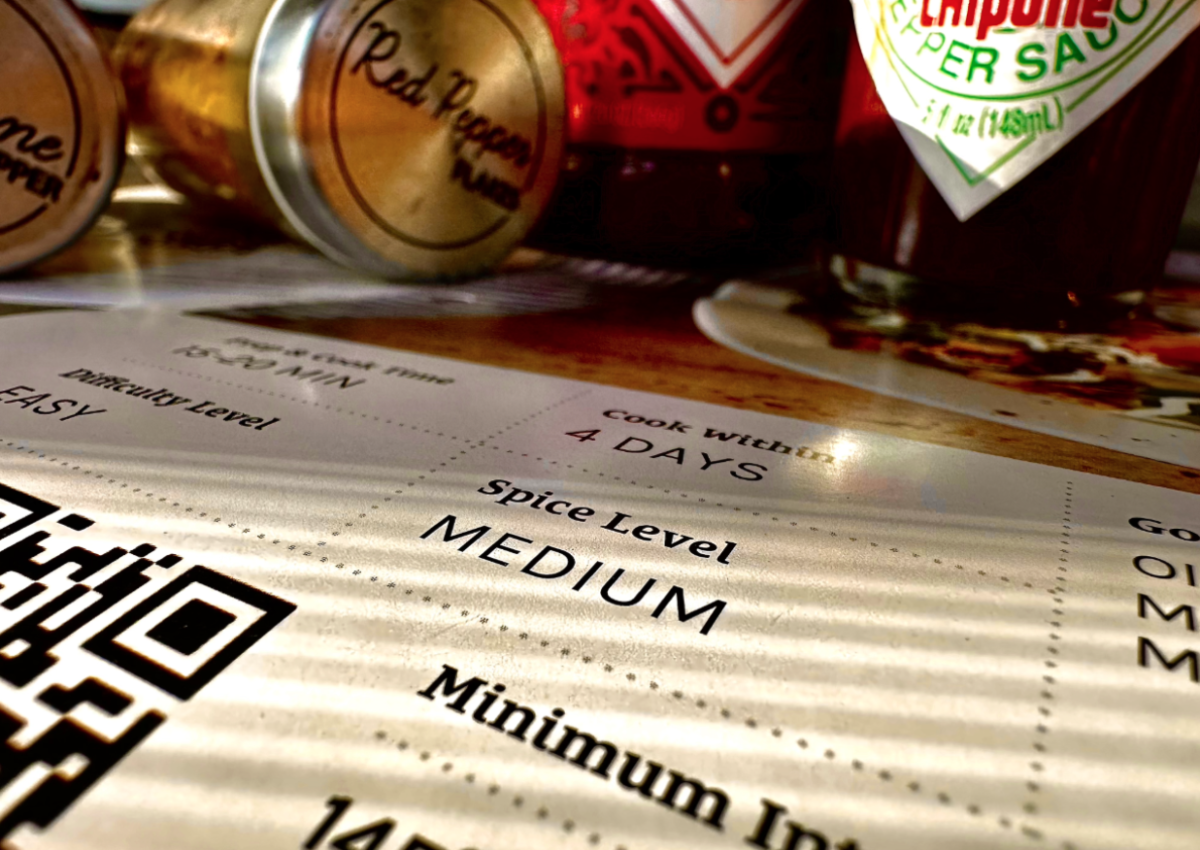
Spiciness can be found almost everywhere and can be added to almost anything. From Trader Joe’s Takis to Buldak spicy ramen to a simple cook-at-home meal, spices are added to everyday meals to give them some color.
How much spice is too much spice, though? Spice tolerance is something that varies from person to person, and for some, a number of foods are too colorful to handle. The mouth burns, face sweats, and eyes tear up, but why?
To put it simply, spicy ingredients cause a chemical reaction inside the mouth that releases pain messages to the brain. According to Kean Health, capsaicin is the heat receptor connected to nerve endings that send a “false” sense pain to the brain.
These receptors are connected to a gene in humans and are activated by high temperatures and strong-tasting flavors. This has caused extensive research in whether spice tolerance is genetic, and it’s been proven that 18% to 58% of genetics is a factor in high or low spice tolerance.
However, this does not refute the fact that spice tolerance can’t be built up. Those nerve endings can be broken down and even destroyed, which is not a bad thing and still can’t be explained by scientists. Like a muscle, if spice is added to a daily diet little by little, the ability to tolerate and even enjoy the hot flavor can be increased and maintained.
Aracely Martinez (10) comments that she “adores spicy foods since they make food feel more alive by giving it a bold, kicking flavor.” She credits her higher tolerance to being brought up in a Mexican household with repeated exposure to spicy dishes. That’s “also why I believe some people can manage it better than others,” she states.
While childhood meals and ongoing tastings of spicy food can build a tolerance, the idea that the pain people feel is partly mental has also been explored. CNN Health took a deep dive on this topic and found out that expectations influence a great amount of what people will actually experience.
They showed one group of people with a high spice tolerance and one group of people with a low spice tolerance the same image of two peppers, both colored blue. This was to hide the intensity of each pepper’s spice. They were then given small amounts of hot sauce from the pepper, and scientists watched the brain activity.
The results showed that when the hottest sauce was given when the participants could see the colors of the peppers, those that liked spicy food felt pleasure, while those who didn’t had a spike in pain and discomfort. The intensity of the hot sauce and the visuals of the peppers were switched around, and the data stood true. When people expect something to be hot, their reactions are heightened and influenced, rather than if they were just tasting hot sauce they couldn’t make any inferences on.
Sophomore Jasmine Moawad shares that “I personally have a very low spice tolerance. I can handle some things but if I have a lot of it it’s too much for me, like chips.” Of course, there will always be those that will always enjoy the bursting flavor of spice that food brings, and those that prefer a milder taste. But boundaries can be broken, and maybe one day everyone will be enjoying a steaming bowl of Buldak spicy ramen with pleasure.