





















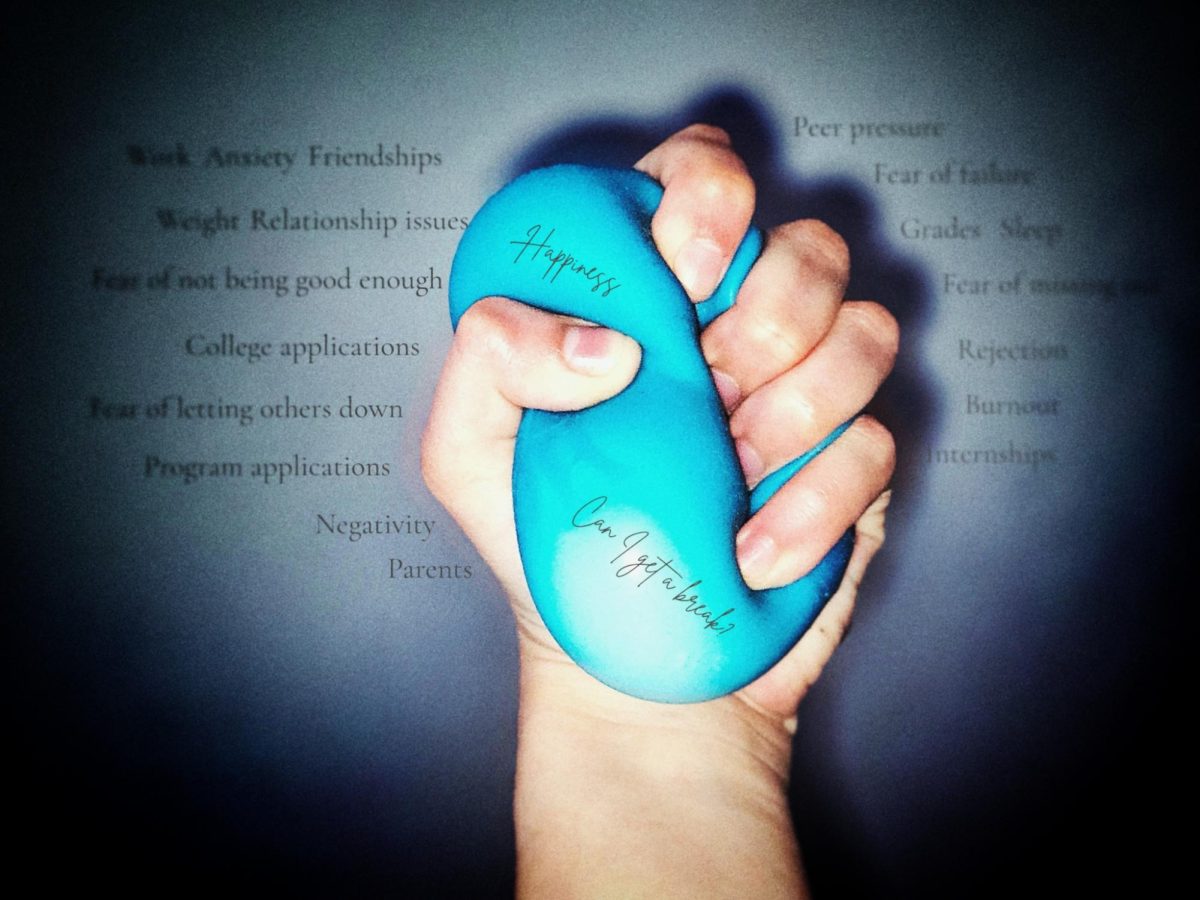
Days go by and the invisible hour glass makes us anxious. How long will it take to disappoint our parents, fail our goals, or convince ourselves that we can get out of this hole? It’s a never-ending loop that continues until we distract ourselves.
The truth is, we can’t help but have a million concerns and a billion reasons jumping around in our minds; it’s part of the human psyche. Unless you are a robot, the inescapable reality of things will affect you one way or another; however, many of us get rid of these feelings in different ways.
A particularly popular outlet to release anxiety and satiate worry is fidget toys. Tactile input is great at regulating our emotions for one reason: attention is diverted. Energy consumed while worrying is soon transferred to the squishy exterior of a round fidget toy. Aiza Sheik (11) shares her experience: “As someone who struggles with really bad anxiety, having something to fidget with is extremely helpful. It redirects my mind to something else, and I can actually focus.”
As fidget toys become a more mainstream alternative to calming the mind, the U.S. market is expected to rise to approximately 2.93 billion in 2026. A lot of this stems from the intense marketing targeted at people with special needs like ADHD, but what is interesting is that a large portion of U.S. buyers don’t buy fidget toys to satiate anxiety. They buy them because of the social media fascination or they simply like to be fidgeting with something. Kiany Gomez (11) highlights this idea: “I think that fidget toys are great for concentration and stress-relief, but I personally don’t use fidget toys for solely that purpose. They’re just fun to use, and I see them on social media a lot.”
Before social media times, people had many different ways to relieve stress. They meditated, practiced mindfulness, and much more. Their stresses were labeled as purely “work-related” and “life-related” when many actually had disabilities like ADHD and autism. It wasn’t until the late 1980s that we as a society began to understand the root cause of attention deficits and sensitivity to stimuli, and it wasn’t until 2017 that fidget toys became popular.
We didn’t know we “needed” fidget toys until our needs were pushed upon us, so their benefits still remain largely subjective. They could improve or not affect your mental health at all, but they can sure keep you occupied.