







My evaluation of the present is simple, echoed in Alexander Dumas’s words: “[R]emember what has once been done may be done again.” The Count of Monte Cristo, like many other books, contains ideas and beliefs whose value seems to fade as Instagram and TikTok take center stage. But if people live their lives scrolling, how much influence can words on a printed page still have on society?
Media monopoly
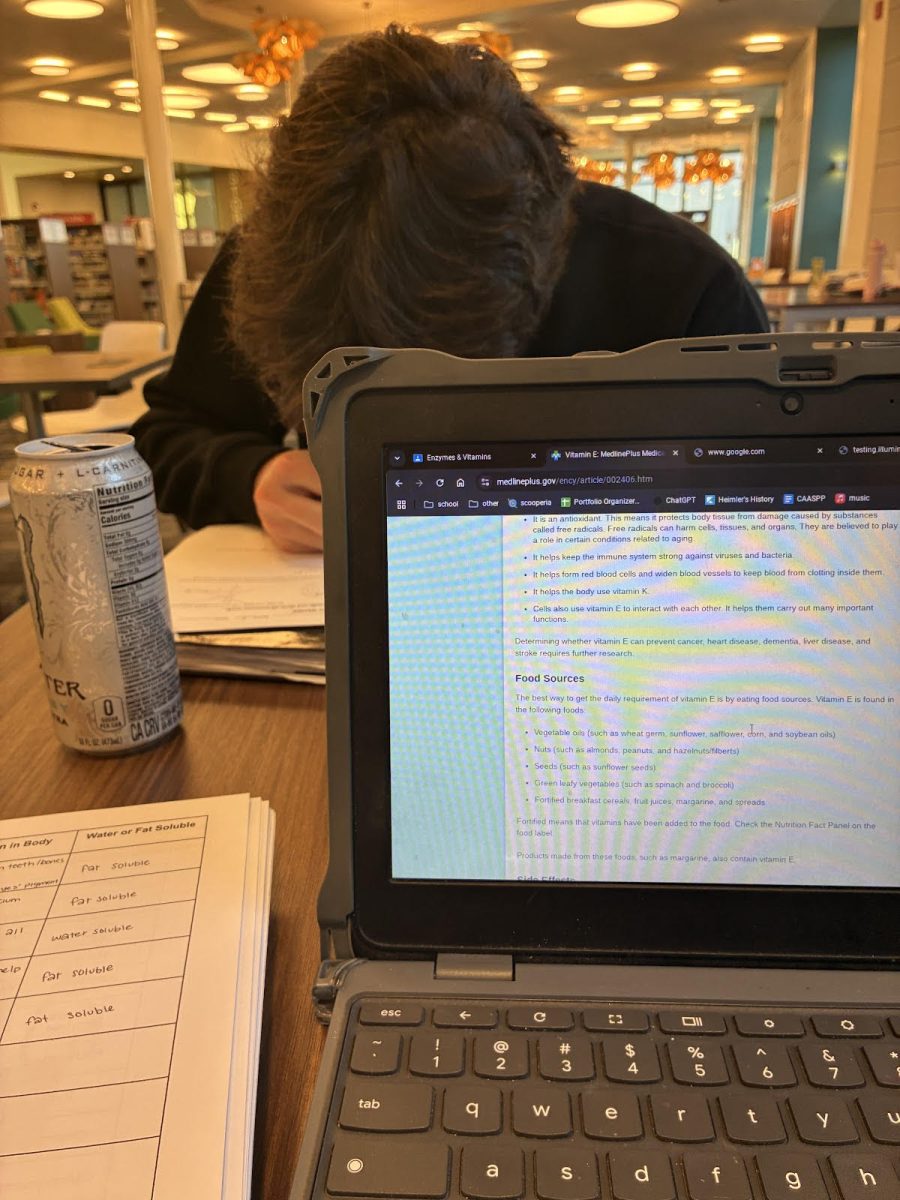
There have been many instances of a sort of “break” in the matrix, where the addiction to social media has taken a pause, but the grand majority of our time is unfortunately spent in front of a screen. In an age of technology, books don’t quite reach the threshold for interest.
People in the 2000s were captivated by the internet, and as the trend continues to 2026, reality has become severely distorted because of it. However, this type of mainstream distortion only increases “relevancy” and attracts more users. Brent Singerton (11) adds that “it’s hard to find relevant and interesting information at a moment’s notice from a book.” Kiany Gomez (11) supports that idea, saying that “social media is just so much quicker, and [she doesn’t] need to think about what to look for next; it just pops up.”
Impact of literature
I know that there is a “governing” of social media over everybody, especially the young feeble minds, but we simply can’t ignore what books have done for society. Harriet Beecher Stowe’s book Uncle Tom’s Cabin heavily influenced the American Civil War, Thomas Paine’s Common Sense triggered an acceleration of the American dependence movement from Britain, and a more modern example, Malala Yousafzai’s I am Malala inspired a new generation of activists. Books portray a world that can’t be captured through short videos and TikToks because they are a fairly representational version of the human mind.
A past to reflect on
The creation of the printing press was a pivotal moment in the 15th century for three reasons: increased literacy, the standardization of knowledge, and the spread of new ideas. These three reasons draw a strong parallel to present-day America, despite the fact that literature is a widely contested source with the rise of social media. But the truth is, both words on a screen and words on paper are capable of making you feel euphoria or sorrow—all of which are critical emotions we must process to hold our standing in the real world.
Sasha Abramsky—journalist, lecturer, and author of The American Way of Poverty—shares that “reading books about current affairs is important to help you understand the world around you. Once you understand what is happening, it empowers you to work for change.”