



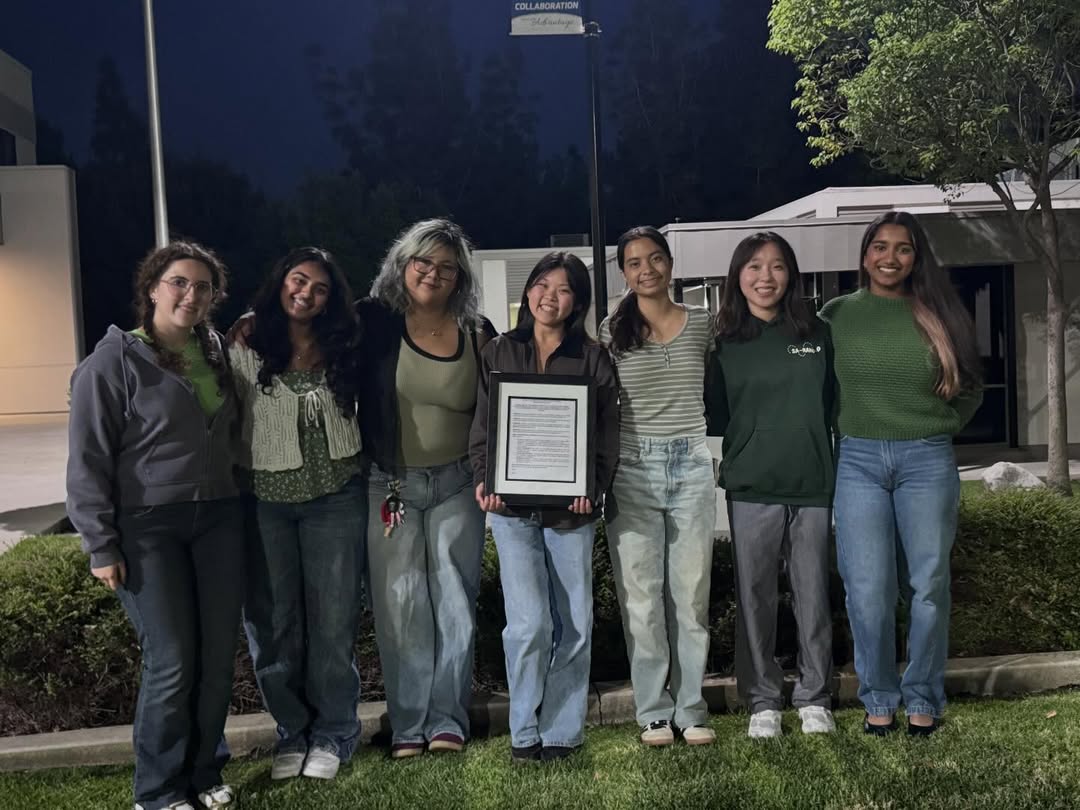








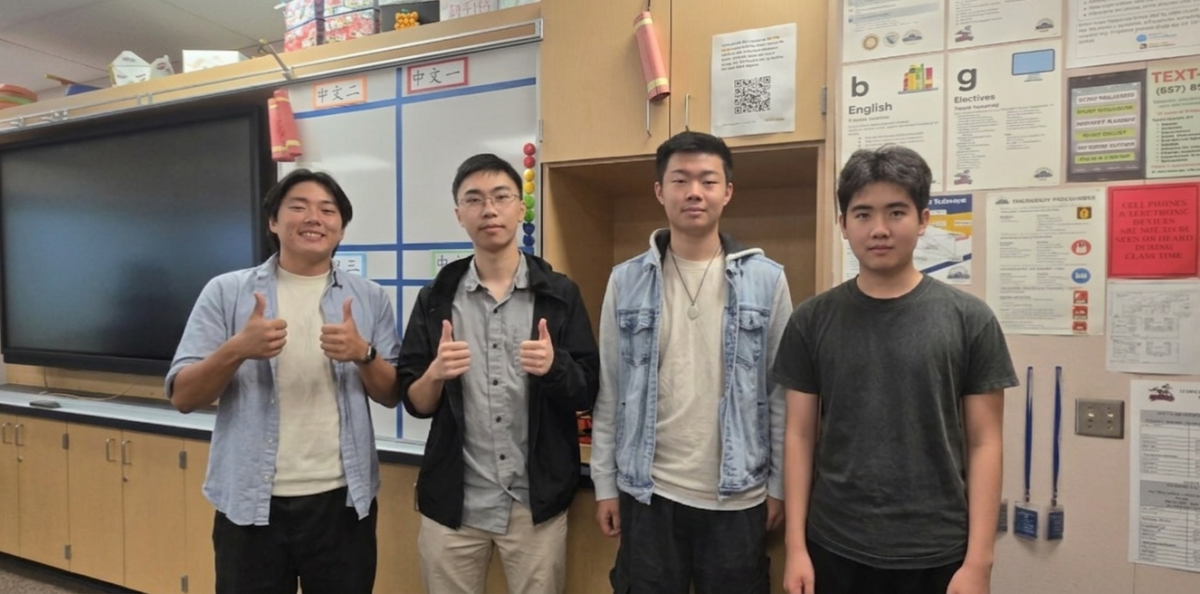
After spending a month of preparation, Yorba Linda High School juniors Kyle Khong, Desmond Liu, Charlie Chen, and senior Ethan Hayashi were awarded third place out of over 100 participants for the competition of The Harvard Undergraduate Research Journal (THURJ).
The Harvard Undergraduate Research Journal was founded in 2007 to recognize original work done by undergraduate students. Although this research journal mainly publishes undergraduate research papers, this competition was designed for high schoolers. As a peer-reviewed undergraduate research journal, THURJ covers all research topics, including the natural sciences, social sciences, and humanities. The competition entails “[E]xecuting an independent investigation to produce new knowledge…[the] research proposal is a structured plan seeking approval or funding for that study,” states Kyle Khong (11).
Through this experience, Charlie Chen felt the impact of realizing how deep research can become through evidence, methodology, and real-world significance. This competition has also made him more interested in research that combines the topics of biology, medicine, engineering, and innovation. Although he would like to pursue interests that are business-related, Charlie (11) explains, “This experience helped me realize that research and entrepreneurship can overlap, especially when an idea has the potential to become a real solution for a serious problem.” For Charlie and his team, this competition taught them how to turn sophisticated ideas into real-world solutions.
Charlie was interested in finding research opportunities that allowed high school students to explore advanced topics in a formal setting; therefore, he searched until he found the Harvard Undergraduate Research Journal. As a student interested in the topic of medicine and regenerative science, this competition felt meaningful to him by challenging himself while learning to build a strong research proposal.
After Charlie discovered this competition, he recruited his other friends, Kyle, Desmond, and Ethan, to join the team.
For the research proposal, Desmond Liu (11) shares, “I was inspired by Dr. Rongxiang Xu’s work on burn medication and Potential Regeneration Cells, leading me to theorize a similar treatment for spinal cord injury, where if we create an ideal microenvironment, the body’s dormant regeneration potential would be awakened.” Through the idea that Potential Regeneration Cells can be activated through biomimetic hydrogels, they based their research proposal on the idea that there can be a new method to treat spinal cord injury.
After the topic for the research proposal was decided, the team prepared by reading multiple research papers related to this topic. Then they incorporated what they had learned into their own proposal. Through delegation, deadlines, and coordinating times to call and work together, each member was assigned to review the material, and they were able to create their own research proposal together.
Each of the team members acquired tasks based on their leadership and research roles. Since Charlie was the team lead, he was in charge of organizing meetings, creating main outlines, and making sure everyone’s work could be connected into a united proposal. On the other hand, Kyle was assigned to write the introduction and conclusion. The other members focused on researching, gathering information, and helping the other members understand more about the scientific background of this topic.
This research topic posed the challenge of making a complicated scientific concept accurate and understandable. Complex topics and ideas, such as cell limitations, tissue microenvironments, hydrogel scaffolds, and neural repair, needed to be understood and translated into one clear argument: there can be an improvement made on spinal cord injury through creating the right environment for the body to repair on its own, instead of focusing all on regenerative cells.
When challenges arose, the team often took a short break and then took a step back to reflect on the overall problem. Through communication and solid teamwork, they were able to complete this research proposal successfully. Kyle expressed that delegation and cooperation are essential in teamwork, along with selecting people who are responsible and trustworthy.
With a challenging, formal competition that required extensive research, teamwork, and preparation, Kyle noted that although he was afraid of presenting in front of college professors and anxious about stuttering, he had hopes for high achievement.
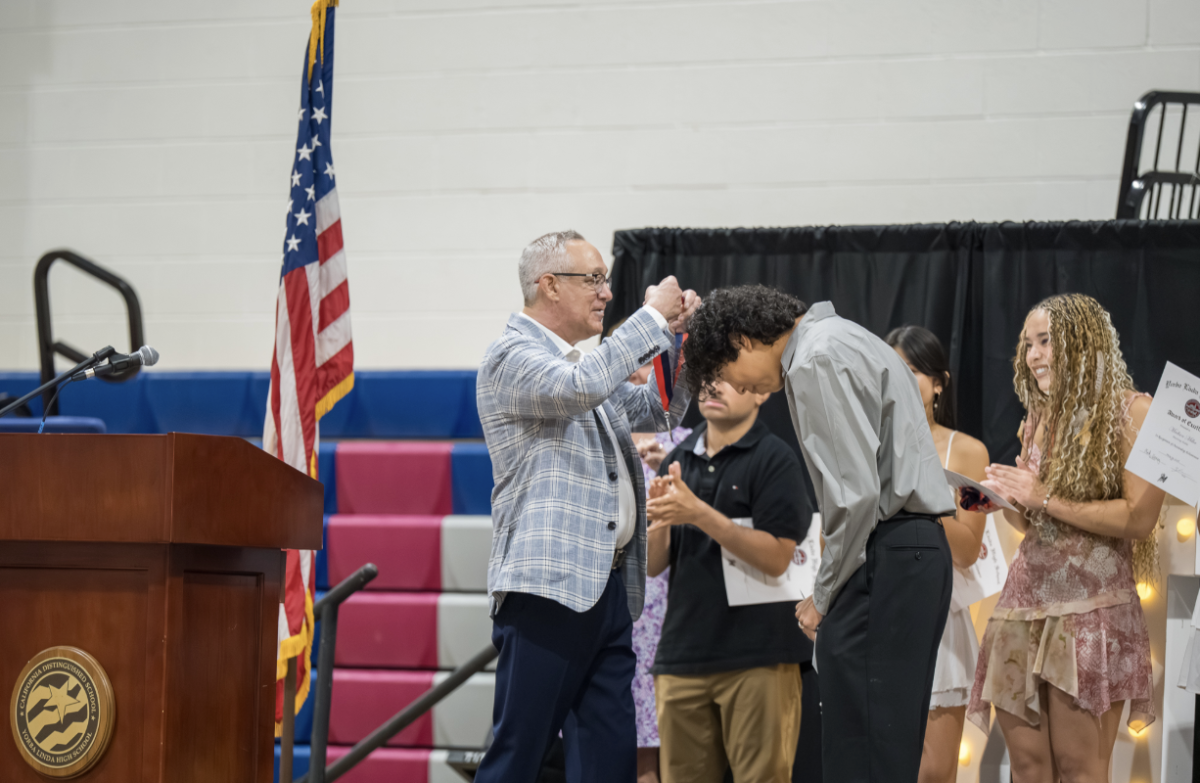
The presentation was prepared by creating a slideshow and script, along with presenting to each other and timing themselves. On the day of the competition, the team woke up at 5 A.M. to practice presenting. Their presentation occurred at 9 A.M., which lasted 30 minutes. Finally, they attended the awards ceremony.
Through this competition, Desmond Liu (11) learned more about hydrogels, which are a type of biomaterial. He mentioned, “I learned how hydrogels can be engineered to mimic the body’s tissue, and how that can be used for medical purposes.”
Ultimately, the THURJ competition was more than just a third-place award or an achievement to put on their resume. This competition led Charlie, Kyle, Desmond, and Ethan to learn how to turn thoughts and ideas into a realistic proposal while learning soft skills, such as teamwork, research, and delegation. This experience has proven to be invaluable to their future, giving them further insights into research and showing how different fields can collide.
