
















Normally, everyone is always raving about getting the next new thing, whether it’s the new iPhone, a new laptop, or the newest version of AirPods. On a deeper perspective, it is almost a wealth status symbol of whether or not you’re able to keep up with the new trends.
However, wired headphones are making a comeback, especially among Gen Z. Gen Z is typically known for revisiting old trends and items, like digital cameras, CDs, hacky sacks, and more. Even though some individuals actually have wireless headphones like AirPods, they still prefer to use wired headphones, but why?
Well, there are many reasons for the sudden resurgence of wired headphones. First, people sometimes solely wear wired headphones for the look. On social media platforms, the idea of being “performative” is trending. In short, performative essentially means that an action, behavior, or phrase is done for the sake of appearance, usually to gain attention or create a specific image. Joanna Chun (10) shares, “Whenever I see people with headphones, sometimes they aren’t even listening to anything. They just have the headphones hanging around their neck or tucked in their shirt, probably just for the look.”
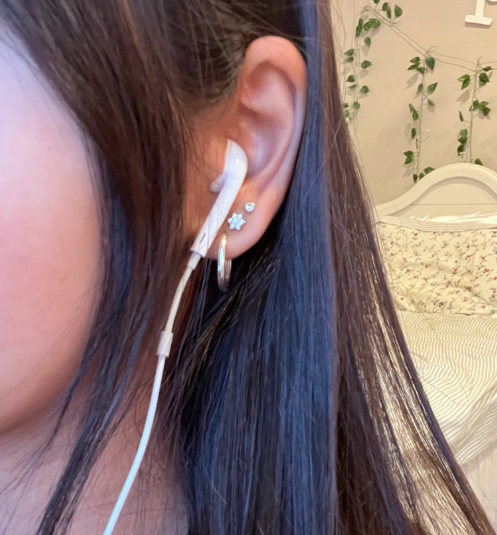
Thanks to TikTok, wired headphones are a part of a “messy,” “real,” and an “anti-perfection” look, giving that individual a more authentic vibe and appearance. Additionally, wired headphones almost radiate “main character energy,” as it is a visual way of indicating that you are listening to music, whereas on the other hand, it can be a bit difficult to tell if someone is wearing AirPods.
Many users argue that wired headphones feel more personal compared to modern wireless devices that have become almost universal. Wired headphones are often connected to nostalgic fashion trends inspired by the 2000s and early 2010s, blending technology with vintage aesthetics.
Furthermore, people are not just wearing wired headphones for the look, but also as a way to reject hyper-consumerism or constant tech upgrades. There is always a battle between overconsumption and underconsumption and how, sometimes, being a minimalist is actually more beneficial. This movement reflects a growing “analog lifestyle” trend among younger generations who feel completely overwhelmed by constant digital connectivity.
Moreover, people are recognizing the advantages of having wired headphones and how convenient they are. Instead of having to constantly charge AirPods, wired headphones are conveniently always able to output sound. At the same time, some consumers appreciate that wired headphones are typically more affordable, longer-lasting, and less likely to be lost, making them both a stylistic and financial practical choice.
With the comeback of wired headphones, people are praising the headphones themselves and romanticizing the simpler technology and offline culture. People genuinely make this their lifestyle, whether or not it’s real or “performative.”
Wired headphones have become associated with a slower and more authentic way of living, reminding people of a time before constant notifications, algorithm-driven content, and hyper-polished social media aesthetics. Not only do wired headphones give a visual message of “I’m listening to music,” but they also act as a statement against modern tech culture.
Sophomore Riley Brown expresses, “I think people wear wired headphones to show that you don’t need the newest tech gadgets to relate with people. Wired or not, headphones still play music.” Even if some people participate in a trend purely for appearance, the comeback still reflects a broader desire for individuality and disconnection from the pressure always to consume the newest technology.
Ultimately, the comeback of wired headphones represents more than just a shift in technology trends. Whether people wear them for convenience, nostalgia, or aesthetics, wired headphones have become a symbol of authenticity and resistance to constantly upgrading to the newest products. Even if the trend eventually fades, it reflects how younger generations continue to redefine the meaning of style, identity, and consumer culture.