





















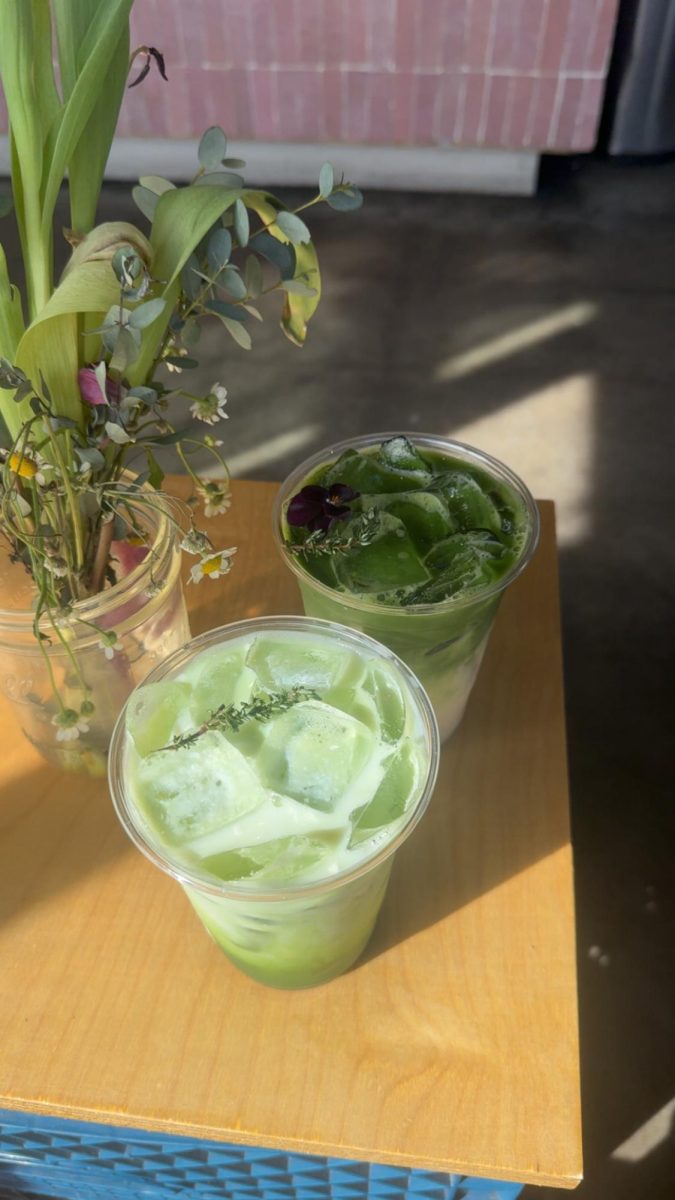
The deep, earthy green of matcha powder is nearly impossible to avoid, whether you meet this encounter at a café, a grocery store, or even social media. Typically marketed as a self-care essential or an out-and-about treat, this iconic Japanese profile may be featured in lattes, desserts, and even makeup or skincare products. While this popularization of foreign flavors catapults an overall appreciation for cross-cultural exchanges, the growing western interest in eastern tastes still prompts a broader conversation about the extent of which traditional flavors may be adapted and if the cultural origins are being intentionally dismissed.
Making matcha was originally categorized as a form of art, incorporating a variety of techniques and tools coupled with patience. Traditionally, the Japanese utilized a bamboo whisk and ceramic bowl to induce a gentle froth after meticulously sifting through a ceremonial grade powder. The water was boiled at a precise temperature to avoid burning the delicate powder and after the vibrant green thickened, it was served with milk and minimal sweetener. In modern times, the earthy and floral notes of matcha are drowned with overpowering syrups and disruptive creamer concoctions. Instead of sourcing matcha powder with the intention of serving the beverage with utmost quality, coffee shops have resorted to purchasing pre-sweetened matcha powder in bulk, increasing the risk of matcha oxidation and texture inconsistencies. When purchasing a matcha latte at a nearby cafe, it is unfortunately likely that the faintness of its color will correlate with its lack of herbal depth.
TikTok possesses an unfathomable degree of influence that has both dispersed cultural pride amongst individuals who have yet to become exposed to Asian delicacies and the nuanced taste profiles associated with them. A prime example of a complex, yet highly misunderstood, flavor is one that belongs to the renowned Filipino purple yam – ube. Ube is recognized for its natural purple hue and blend of earthy and nutty tones. Although these flavors are some of the simplest to distinguish, ube’s taste profile has been mischaracterized as resembling “white chocolate” or “vanilla”. Therefore, its unique flavor has gradually diminished as mass media and western customs have hastily adapted this ethnic yam. On March 3rd, Starbucks released its spring menu starring an Iced Ube Coconut Macchiato, reinforcing a broader issue: Asian flavors comprised of unfamiliar profiles are unnecessarily fused with tastes better acquainted with the general public. Leyna Mou (9) reports, “The macchiato contained no discernable ube flavor and if there was any, it was overpowered by the intensity of artificial coconut.”
Now making its rounds on the trend track is none other than a beloved grocery store Asians and Asian Americans alike have grown up with: HMart. A staple in a days worth of errands, once a simple stop to restock on familiar ingredients and comforts, has seemingly transformed into yet another spectacle fixed to appeal to online audiences. Often filming themselves wandering through aisles and marveling at everyday ingredients, content creators and social media influencers end up framing the trip as a foreign exhibition rather than a routine grocery trip. “Once running to HMart really quickly to pick up an ingredient my mom left out of a dish, I came across someone loudly talking to and filming on their phone, exclaiming how gross it was that a chip was made out of shrimp,” Ariel Zhou (12) recalls, “To me, that was just a typical snack I frequently ate as a kid.” Moreover, the language these creators use reveal a far more troubling rhetoric surrounding the experience.
With many TikTok reviews including words like “unexpectedly” or “questionable,” the diction used to describe these foods fosters subtle yet undeniably negative connotations. These words imply a preconceived notion of the inferiority of Asian flavors and expose that the speaker had anticipated disappointment to begin with. Though these descriptive words may appear harmless at face value, the quiet perpetuation of the undesirability of Asian favors is furthered.
This isn’t one special experience but rather, a pattern. “Foreign” foods have gone viral in the past, only for it to be treated as a novelty, sampled, rated, and then discarded after the fad fades. The historical background then becomes diluted and generational flavors associated with the popularized Asian cuisine are reworked and lost. Dishes of Asian descent that were once mocked and excluded are now being deemed as profitable attractions. Tiktok audiences have seen this pattern in foods like lavashak and Dubai chocolate. Time and time again, a sudden rise in popularity of Eastern flavors begs a far deeper question: are these waves of attention formed by genuine cultural appreciation, or are they repackaged facets of culture all tied in a big bow of short-lived sensationalism?


Sophia Lee • May 21, 2026 at 7:35 AM
This was a really insightful and interesting article! It’s great that Asian foods are getting more recognition; however, the way it’s being recognized is questionable.
Derek Truong • Apr 23, 2026 at 7:31 AM
This was a really interesting take on something so trendy right now. I haven’t thought about the effect of foods on culture, so this article was very eye-opening to me!
Kaitlyn Wang • Apr 23, 2026 at 7:31 AM
This is so interesting to read! I love how you made great points about how these foods were brought to many people’s attention through social media and other platforms.
Journey • Apr 23, 2026 at 7:28 AM
This was very good insight on this topic. Great article!
Ameera Tummuru • Apr 23, 2026 at 7:28 AM
This is such an interesting article especially since I feel like this is happening to so many Asian cultures and so quickly at that. It’s so weird to see something that I’ve grown up with be “discovered,” see all these people sell it out, and then rebrand it as a euro-centric thing.
Melody Sutanto • Apr 23, 2026 at 7:25 AM
I’m so glad you brought attention to this odd phenomenon. Seeing things like Chinese New Year and Chinese zodiacs become the stuff of trends was an odd treatment of Asian culture.