






















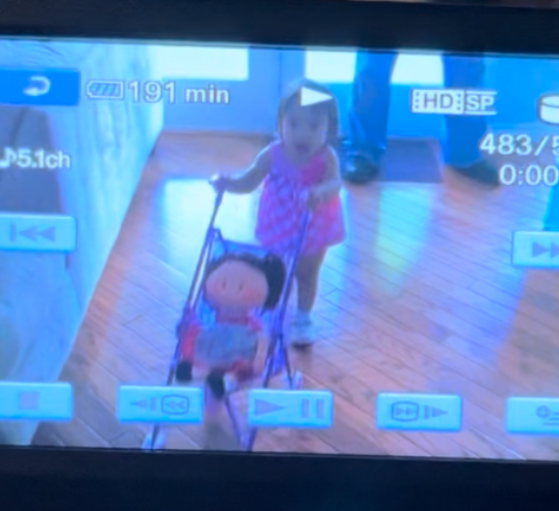
At first glance, a baby playing with a baby doll may seem a little ironic. Why would a child be so interested in a toy that looks just like them? The answer lies in how young children learn, explore, and understand the world around them.
Pretend play is vital for the development of young children, according to the National Library of Medicine. It encourages imagination and it allows the child to be the one in control, forcing them to think by themselves without any influence. With pretend play toys like kitchens, cleaning supplies, and outdoor houses, dolls are often the first objects used in imaginative play. According to Ava Bruckner (11), “I liked playing with baby dolls when I was younger, [even] more than toy kitchens or other pretend play sets, they just felt more natural to play with.”
Baby dolls often appeal to young children because of their big eyes, soft bodies, and life-like features, making it easier to be comfortable with them. In fact, they feel so comfortable with their baby dolls that they actually start to nurture them. By changing their “diapers,” feeding them, and dressing them, they learn to be empathetic and caring at a young age. It represents a form of role-playing that teaches young children to consider the needs and feelings of others. But still—why do they feel the need to do this?
Well, the answer is simple: they are mimicking the behavior they see in their everyday life. By copying the behavior of the adults around them, they are learning to communicate and care for others while also learning about how to read different behaviors. When a parent’s child is crying, they soothe the baby calmly. So, what does the child do now? They rock their babydoll to sleep, hoping to make it feel better. “Watching my nieces and nephews play with baby dolls, it’s easy to see how natural it is for kids,” says Jazmin Montalvo, an aunt of six. “Even the younger ones, like Bella, Emma, and Carter, who are only two, will hold or carry dolls around like they’re taking care of them. It’s something they just seem to understand.” These young children are learning about responsibility and care as they interact with their dolls in this way.
Additionally, playing with baby dolls enhances the young one’s facial recognition abilities. From birth, babies are naturally drawn to faces, and dolls usually have big, simple facial features. Companies are aware of this, and often appeal to the round faces, big eyes, and small noses to attract attention and nurturing responses. Dolls usually have simple facial expressions, which also makes it easier for babies’ developing brains to process. Also related to facial expressions, babies recognize the emotions on their baby doll’s faces, making it easier to understand social cues and further developing their early emotion learning. Because babies spend so much time looking at a caregiver’s face, a doll’s face can feel familiar and engaging compared to toys without faces.
Furthermore, baby dolls are effective for encouraging independent play. With no set rules, children are in charge of the situation and take on leadership roles. Babies often spend most of their time being cared for; when roles are reversed, they realize that they are capable of independence and can serve as caretakers. For instance, some baby doll add-ons promote this independence even more, like strollers, cradles, bottles, and even potty sets! By following everyday routines they see adults do, they gradually become less reliant on someone else to entertain them because they are too busy staying on their own schedule. Simple actions like feeding, patting, or holding a doll can make a child feel successful and capable as they learn new motor skills.
In the end, babies’ fascination with baby dolls is not as strange as it may seem. What looks like a simple toy actually supports important parts of early development. Through pretend play, babies begin practicing empathy, independence, and social behaviors by copying what they see adults do every day. The familiar facial features of dolls naturally draw their attention, while caring for them allows children to experiment with new roles and feel a sense of control. Rather than being just a toy, baby dolls can serve as an early learning tool that helps young children understand relationships, emotions, and the world around them.