











On February 1, 2026, the 68th Annual Grammy Awards aired on national television. It averaged 14.4 million viewers, a 6% decrease from last year. Three primary factors caused this decline. First, many artists used their platforms to send political messages, leaving viewers feeling exhausted as they sought escapism from politics. Secondly, instead of watching the live broadcast on TV, many viewers chose to catch the highlights and viral moments on social media. Third, 2026 marks the final year that the Grammys will air on CBS; starting next year, the ceremony will transition to Disney-owned platforms, signaling a major shift in how the show is delivered to audiences.
YLHS student, Ishan Jain (11), attests to this saying, “I mainly just watched the popular highlights on social media. I don’t have enough time, actually, to sit down and watch.”
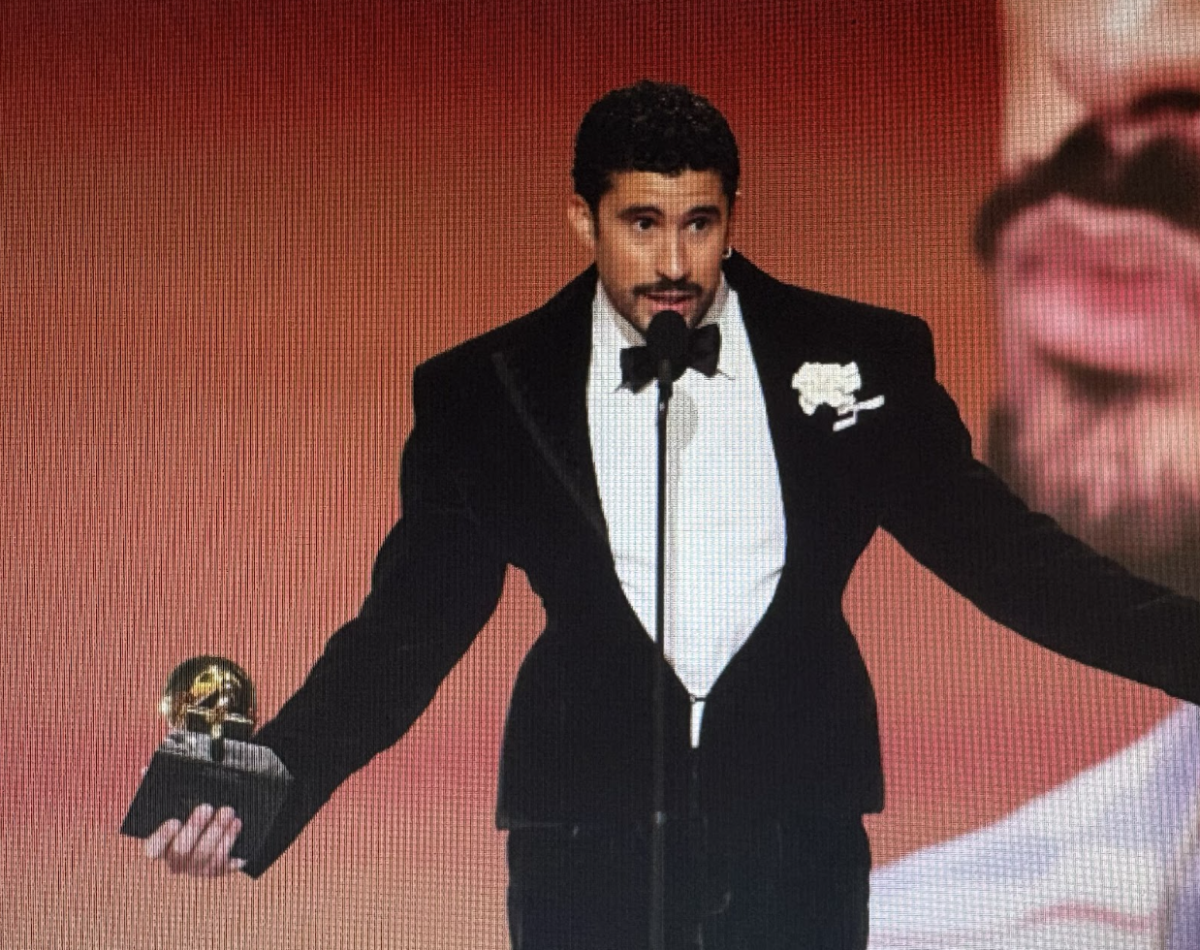
Bad Bunny made history in this category, winning the night’s top honor for his critically acclaimed album Debí Tirar Más Fotos. This victory was a milestone moment for the Recording Academy, as it marked the first time an all-Spanish-language project won Album of the Year. He faced stiff competition from heavy hitters like Kendrick Lamar’s GNX, Lady Gaga’s Mayhem, and Tyler, the Creator’s Chromakopia. Still, his cultural impact and genre-blending sound ultimately secured the historic win.
The award for Record of the Year went to Kendrick Lamar and SZA for their massive collaboration, “Luther.” This win was particularly significant for Kendrick, as it helped him break Jay-Z’s record for the most-awarded rapper in Grammy history. The track stood out among a diverse field of nominees, including Billie Eilish’s “Wildflower,” the viral “APT.” by Rosé and Bruno Mars, and Sabrina Carpenter’s “Manchild,” proving that Kendrick’s storytelling still dominates the industry’s highest level of recognition.
In a category that honors the excellence of songwriters, Billie Eilish and her brother Finneas took home the trophy for their hauntingly beautiful track, “Wildflower.” This win made them the most-awarded songwriters in this category’s history, securing their third career Song of the Year win. They beat out other lyrically driven nominees like Doechii’s “Anxiety” and Lady Gaga’s “Abracadabra.” During her speech, Billie used the moment to speak on the night’s political themes, adding weight to her win.
British soul singer Olivia Dean claimed the title of Best New Artist, following a breakthrough year fueled by her sophomore album, The Art of Loving. Dean emerged victorious from a highly competitive and eclectic group of nominees, which included pop sensations Addison Rae and Katseye, as well as indie favorites The Marías and R&B standout Leon Thomas. In her emotional acceptance speech, she dedicated the award to her immigrant heritage, solidifying her place as one of the most promising voices in global music.
However, the last one caused some controversy. Few people knew who Olivia Dean was, and many argued that another artist should have won it. However, YLHS student Tina Chen (12) holds strong by saying, “Olivia Dean deserved the win! She is pretty, and her voice is silky and magnetic! And her live performances are amazing!”
Aside from the dip in traditional viewership, the night stood as a historic changing of the guard, proving that while the delivery medium shifts to Disney next year, the cultural weight of these milestones remains as loud as ever.

Isabelle Gregg • Feb 26, 2026 at 10:25 AM
I didn’t watch the Grammys, so this was so helpful and informative to read afterward! I loved hearing your voice shine through the article aswell! So interesting!
Journey • Feb 26, 2026 at 7:39 AM
This was a great recap of the Grammys! Good job!