

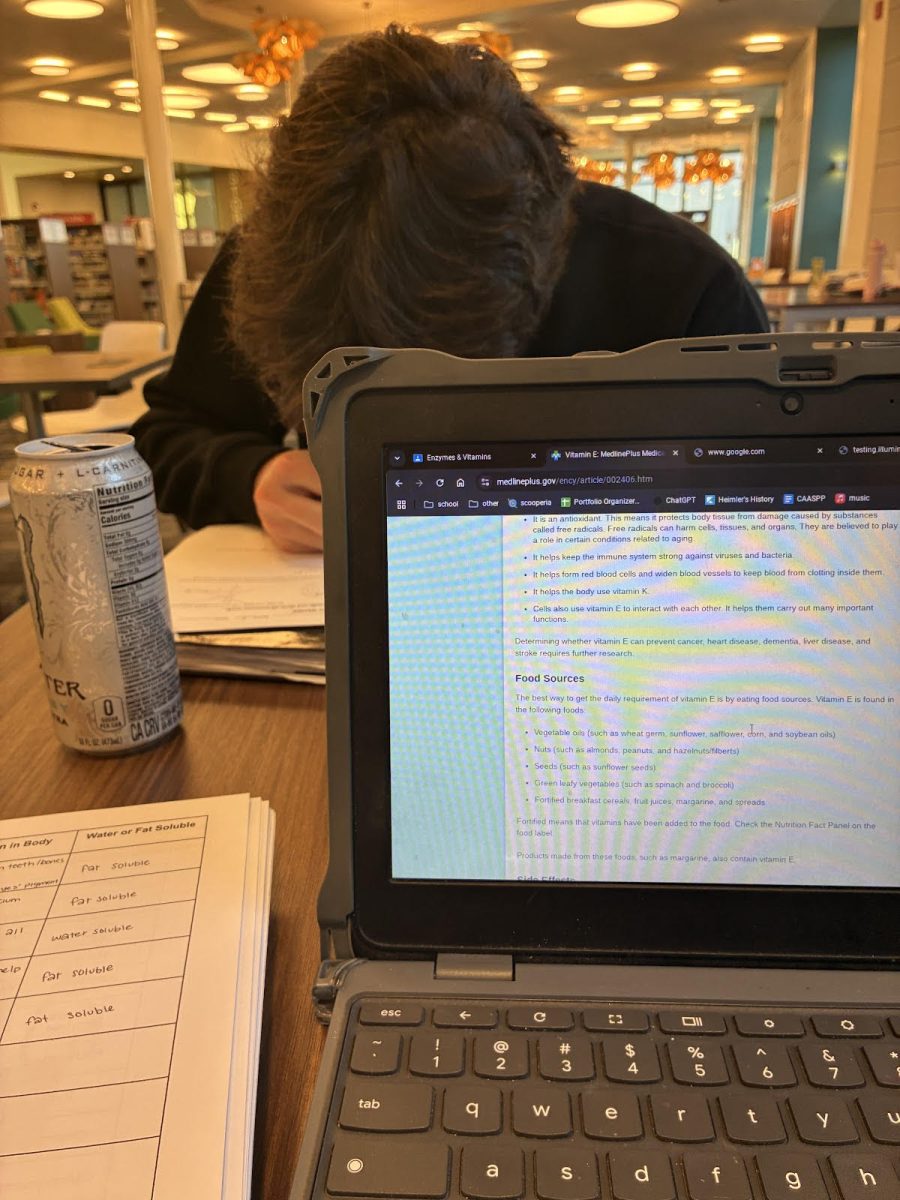













At 1:37 a.m., Haley is still awake.
Her desk lamp is the only light on in the house. A half-finished AP U.S. History essay glows on her laptop screen. Instead of finishing her essay, she stares at her calendar. Tomorrow she has a calculus quiz, a chemistry lab due, and vocabulary terms to memorize all before sunrise. “Just one all-nighter won’t hurt,” she tells herself. After all, this is what she needs to do if she wants to have a successful future.
Meanwhile, her friend Sophie is also awake. Not studying, but scrolling. She dropped the idea of taking AP classes in her sophomore year after a teacher suggested she “might be more comfortable” in regular courses. Now, when classmates talk about their never-ending AP homework and dual enrollment, she stays quiet. She tells herself she’s just not “made to be one of those students.”
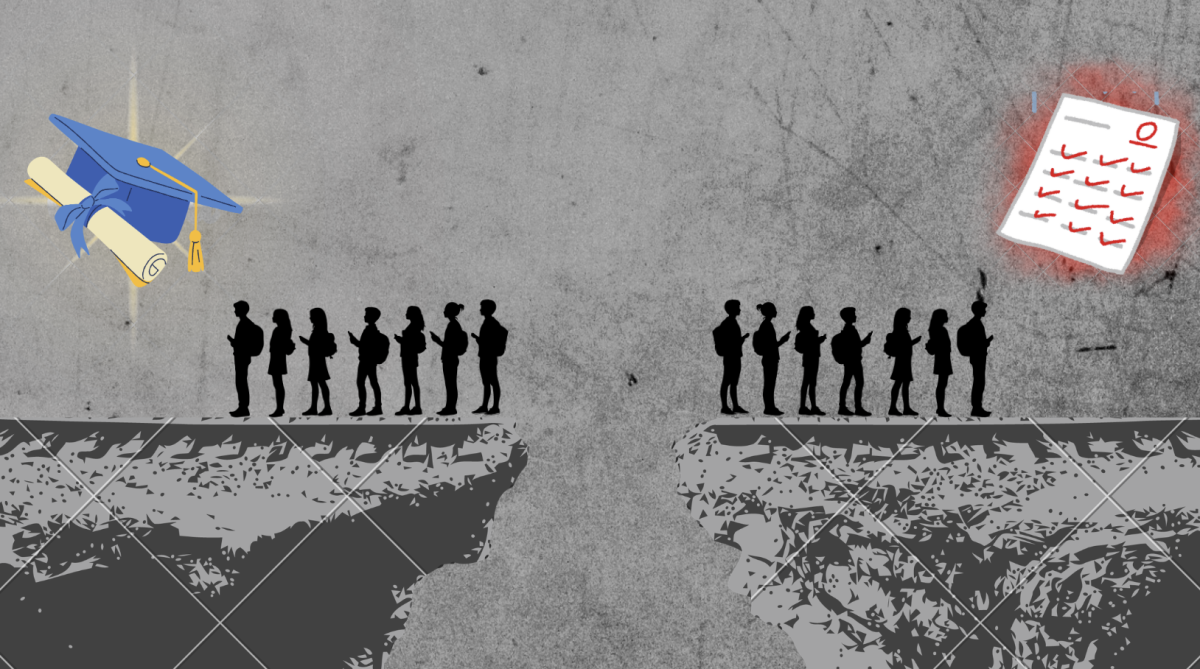
When the bell rings, Haley and Sophie go to two different places, figuratively and literally. On one side of the hallway, the classrooms meant for APs and honors show ambition, passion, and “a bright future.” On the other hand, standard classes are filled with students who the kids who are “obnoxious and troublesome.”
By the time students reach junior year, a split has formed between them, subtly apparent in descriptions and friend groups.
Honors and Advanced Placement courses, created and overseen nationally by the College Board, were made with good intentions. They were made with the intent to challenge students, prepare them for college, and open doors. And for many, they do exactly that. College credit. Weighted GPAs. A résumé that signals readiness.
But alongside the GPA boost and credit, it managed to create something else too: separation.
It’s seen in the way class schedules sort friendships. The way certain students are described as “the smart ones.” Over time, the labels just become a part of daily school life. They begin to shape confidence and expectations. Oftentimes, they begin to shape our identity.
For students like Haley, the pressure can feel never-ending. Late nights. Endless assignments. A quiet competition over test scores and class rank. Success becomes less about learning and more about survival to just make it to college, and it’ll be over. Anxiety is normalized. Burnout is worn like a symbol of hard work. “Some nights it just feels pointless,” Haley admits. “No matter how much I do, it’s never enough.”
Meanwhile, students like Sophie often experience a different weight, invisibility. Some say they feel underestimated. Others say they never had the same encouragement to enroll. In many districts, Urban Institute showed that students from wealthier families are more likely to fill advanced classrooms, while others are left navigating systems that were never designed with them in mind. Classes have now become a social division. Sophie says, “It almost feels like people think I don’t have a future just because I don’t pursue these challenging classes. Then, during every conversation about academics, it feels like I’m being looked down upon.”
Friend groups begin to mirror course schedules. Lunch tables divide along academic lines. Students internalize a thought about where they belong. In schools that were meant to build community, a sudden rift arises between peers who once sat side by side in elementary classrooms.

Liana • Feb 26, 2026 at 7:43 AM
Thank you for writing this article! I’ve never thought about the kind of division that class schedules can end up creating. Most of the people I know at school are from my classes, and it’s hard to meet new people who aren’t in them.