

























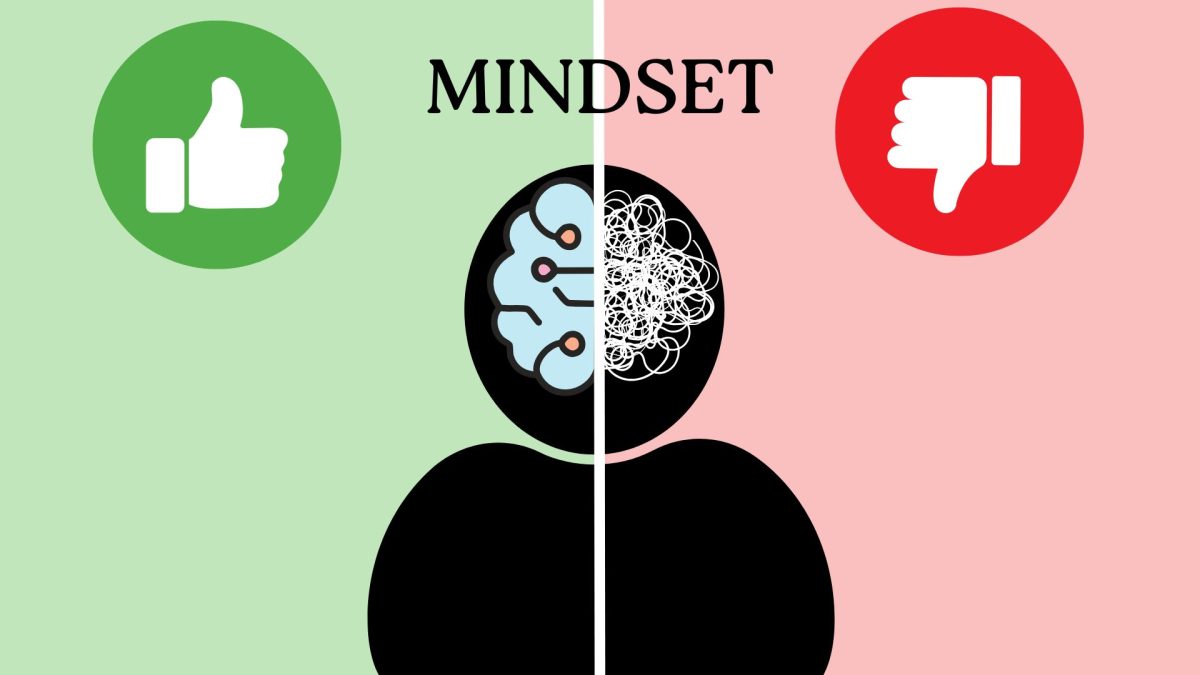
Is it better to be overly optimistic or pessimistic? When it comes to an individual’s mindset, it consists of a delicate balance between both. For many years, people have believed that it is better to always have a positive mindset, whereas others think it is more beneficial to perceive things negatively. Both sides have strong arguments defending their stance on mentality. For instance, overly optimistic people are convinced that they are more likely to succeed since they are viewing life in positive terms. However, pessimistic people think that viewing situations negatively will show any possible faults and how they can avoid them.
Although both sides possess their advantages and disadvantages, new research has unveiled a mentality that fuses both. A common theory is that being optimistic leads to a better mindset, but according to Dr. Ivan Joseph, auspicious mindsets are not reliant on more positivity – but instead on less negativity. Though the two statements may sound the same, the concept of an increase in positivity and limited negativity differs in most aspects. Instead of constantly pushing for a can-do attitude, it is the small negative comments that individuals should focus on.
These small interjections are usually overlooked, even though they occur multiple times throughout a day, and are referred to as micro-negativities. Stated by Abdulmohse Alrasheed (9), “I often do not catch myself saying negative things during the course of the day, but once I started to take account, I noticed it much more. After learning about the importance of less negative self-talk, I tried to combat it, and I immediately saw my mindset change”. These comments start small, but they build up, creating a constant flow of dismissive thoughts. People can overcome these comments by consistently eliminating micro-negativities, which will eventually lead to their mindset shifting drastically.
Additionally, mindset is heavily influenced by the brain, followed by the psychology behind it. In simple terms, the brain often performs whatever it believes. For example, if someone mentally established that “today will be a bad day”, the brain is inclined to follow accordingly. This phenomenon is called the “self-fulfilling prophecy of negativity”. In this current day and age, individuals presume that if they hold their expectations low, they will not be disappointed with the outcome. Although from the surface it may seem to work, by expecting the worst, people’s bodies subconsciously follow what is expected. Addressed by Logan Yi (9), “in theory, by believing the worst is to come, instead of shielding myself from disappointment, it instead does the opposite”.
Mentality is a crucial key to success, and people must find a mindset that benefits and works for them. As with anything people believe in, their minds will find all the evidence to reinforce it. It is not a matter of only having a positive or negative mindset, but finding the perfect harmony between them.

Rebekah Montalvo • Mar 17, 2026 at 11:41 AM
This is a great reminder to myself to maintain a positive mindset in everything I do!