
















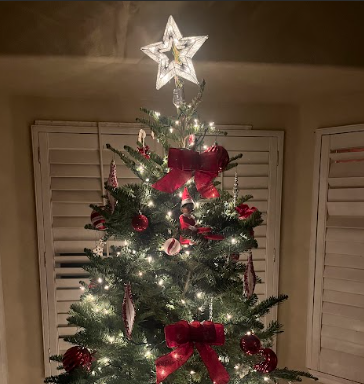
Every holiday season, families face the debate of the same classic holiday question: should they bring home a real Christmas tree or pull out a fake one from the garage? At first, it seems like a simple choice, but families often consider cost, convenience, environmental impact, and tradition before deciding. Neither option is perfect, and neither is necessarily better. Each simply fits different holiday styles.
Real Christmas trees remain a favorite for families who enjoy tradition. Rebekah Montalvo (11) shares, “My family always gets a real Christmas tree because the smell and the whole experience make it feel more like the holidays to us. It’s one of our favorite traditions to do as a family.” Picking out a real tree has become a yearly ritual for many families, and the fresh pine smell instantly brings a sense of holiday spirit into a home.
Real trees are grown on farms and replenished each year, which helps support local agriculture. However, they do require care. Regularly, real trees need to be watered to prevent them from drying out, and fallen needles often become part of the cleanup routine. Fire safety organizations also note that a dried-out tree can pose a larger fire risk if it is not watered consistently or placed too close to heat sources.
Artificial trees, however, appeal to families who prefer convenience. They can be set up early, they do not shed needles, and they are easy to store away until the next year. One student, Taylor Saint-Onge (11), put it simply: “I have a fake Christmas tree, and it’s better than a real one because you can put it up earlier in the Christmas season, and it’s cost-effective in the long run.” For many, the ability to decorate whenever they want—even before Thanksgiving—makes artificial trees especially appealing.
Cost is another important factor. Real trees typically cost between $75 and $120 each holiday season, depending on size and type. That means families are paying the same amount every year. Artificial trees usually cost more upfront, especially if they come pre-lit or are made to resemble a more realistic tree. Still, they can be reused for years. For some families, a single artificial tree purchased once can end up costing less over time than purchasing a real tree every December.
People also consider how much effort they want to put into their holiday setup. Real trees require watering, trimming, and eventual disposal. Fake trees only require assembly and then go straight back into the box when the season ends. Alternatively, some families feel that the experience of choosing and caring for a real tree is part of what makes the Christmas season memorable.
In the end, neither type of Christmas tree is the “correct” choice. It simply depends on what a household values most—tradition, cost, convenience, or the classic smell of pine. Whether a family chooses a real evergreen or a reusable artificial tree, both can fill a home with holiday cheer, bright lights, and the spirit of the season.