






















Introvertedness.
It’s a word we use to describe people, but don’t fully understand.
Merriam-Webster Dictionary defines an introvert as “a person whose personality is characterized by introversion: a typically reserved or quiet person who tends to be introspective and enjoys spending time alone.”
So that’s it. That’s what it is. End of story. Right?
Wrong.
Like many things, introvertedness is just as complex as extrovertedness, or ambivertedness. On the outside, it’s an easy label to give someone if they aren’t outgoing, and that would be correct. But the struggles of being an introvert expand beyond just “being reserved.”
These traits that people stick on to people are commonly mental. They aren’t physical things that people can see, but rather character traits, tendencies, and habits that people glean over time. However, debates over personality traits have been a long-time favorite topic: are these factors of our character really found, or are we born with them? Everything from star signs, birth stones, and animal years have arguments that they affect our personalities in some way. Calling someone an introvert or an extrovert is simply an umbrella term for someone who is either outgoing or reserved. But what really is an introvert?
It may be true that introverts are typically shy and quiet, but that’s only the first onion layer. Introverts can be creative, loud, funny, active, athletic, lazy, anxious, nervous, afraid, excitable, boring, interesting, witty, kind, mean, considerate, dishonest. The list can go on and on, because people have variety; no two introverts are the same. The main defining factor is truly the people around them. People who are generally quiet in large groups can be the loudest in their close knit circle of friends. The people around them shape how comfortable they can be, and that in itself is stressful.
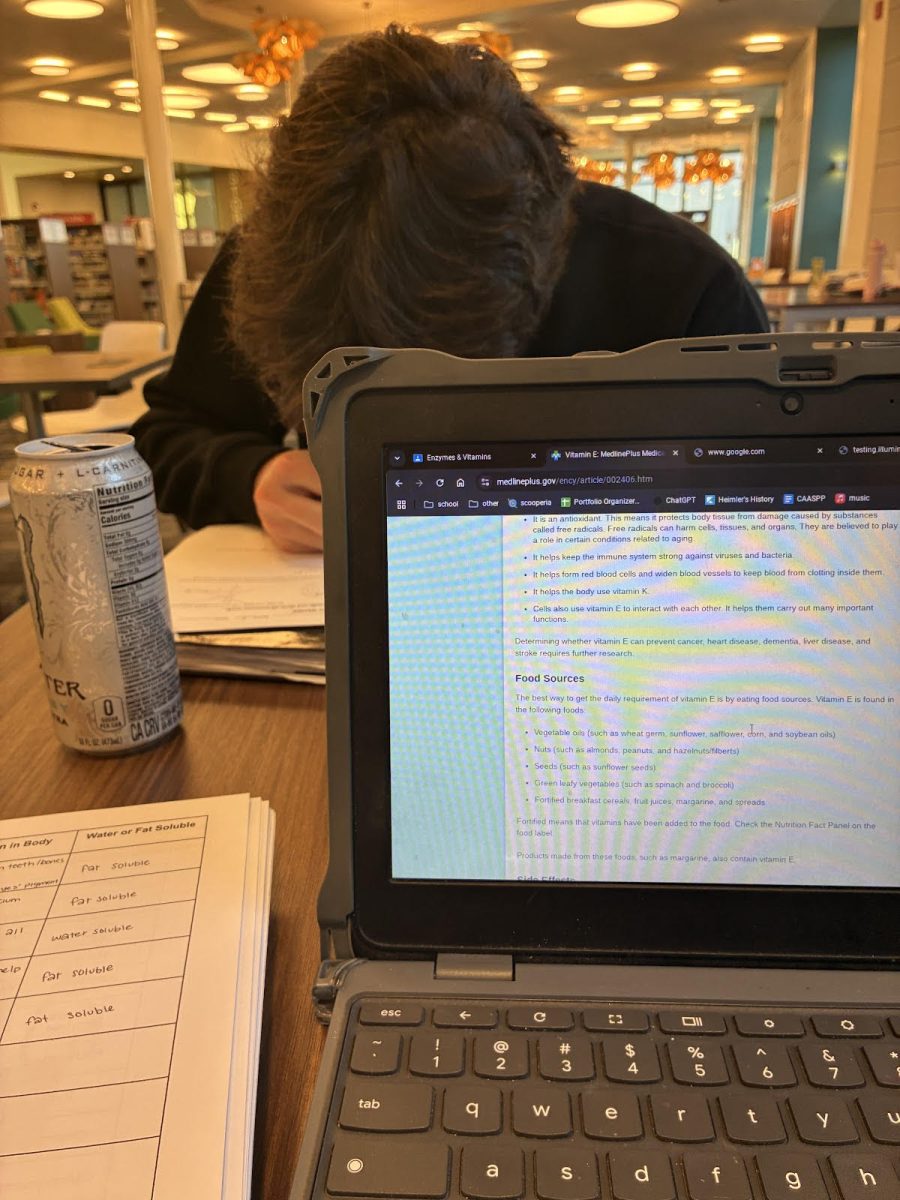
Some find group projects a nightmare. Others struggle with team sports. Jasmine Moawad (10) reveals that being introverted “makes things a bit harder. Like, presenting, I’m always panicking, group projects, since I don’t know that many people in class, I only have my set group of friends … When I first started high school, I forced myself to be extroverted because, being introverted, I didn’t know a lot of people, and [in high school] you need to know a lot of people.” The truth is that being an introvert changes how people go about their daily lives, and it can make a simple Monday extremely difficult.
Stephen King said that “the human mind is truly the scariest thing of all.” It’s ominous because it’s true. Some introverts live inside their mind, and they can be prone to overthinking, anxiety, and stress. Every detail is examined, picked apart, seen at every angle in order to understand a “deeper meaning.” Something as simple as a one-word-text could send them spiraling into a whirlpool of chaos. A single glance, the way someone stands, how they say something, or how they don’t say something, can all be signs of what someone is thinking. Introverts, being themselves, pick up on all of these details.
High school especially is difficult: a huge group of insecure and self-assuring teenagers doing anything in their power to be accepted. The strive to be accepted and “cool” is a goal almost every teenager longs for, not just introverts. It can be hard to connect with people when someone doesn’t like talking to strangers. It can be hard to find similarities when someone is constantly afraid of how someone else will think of them, or their interests, or their clothes, or how they talk or act or think. Constantly being aware can be a blessing or a curse.
So it’s a big thing. Can’t talk to people? Might as well just not even bother with people and high school at all, right? Even though being an introvert can have some drawbacks, there are things that can help. We don’t have to live inside our minds all the time.
- Take deep breaths.
Often overlooked, if you can believe it. Simply being aware and taking a deep breath can help calm you down. If feeling overwhelmed is a problem, stop for a minute and just breathe. Easiest trick in the book.
- Find something to ground yourself.
This can easily be mistaken as nervous fidgeting, but it can actually help a lot. Even if it’s something as simple as spinning a bead on a bracelet, tapping your foot, even counting in your head, find something that will keep you focused and in the moment.
- Talk to a person that you can be yourself with.
When you’re surrounded all day by people you don’t know (or don’t like, for that matter), find someone that you can just be. A best friend, a group of friends, your teammates, bandmates, anyone that you can be your weirdest, funniest, realest self with. This helps release all the tension that you build up through the day, and it can make you feel wonderful.
- Be real with yourself.
Honestly a big one. It’s okay to be honest with yourself. If you’re stressed, be stressed. If you’re overwhelmed, let yourself be. If you’re happy, know that you deserve it.
- Live the day to your fullest.
In the long run, it’s high school. It’s four years out of the rest of your life. You shouldn’t waste all your experiences worrying over other people. Live your life to your fullest. Have fun. Be present. Go to football games. Because you have so much life ahead of you.
Shaylee McKemy (10) states that she herself has grown a lot as a person, and that “this year, I have definitely grown more confident, and I have learned that I don’t need to be the most outgoing person to connect with others.” This is powerful, because it’s true. The most outgoing person in the room doesn’t have to be the most popular, or the one with the most friends. Extrovertedness does not equal an easy life. Introvertedness does not equal an easy life. It’s just something that people have to live with. But they shouldn’t let it be a hindrance for their living. Because nothing should take away from that.