

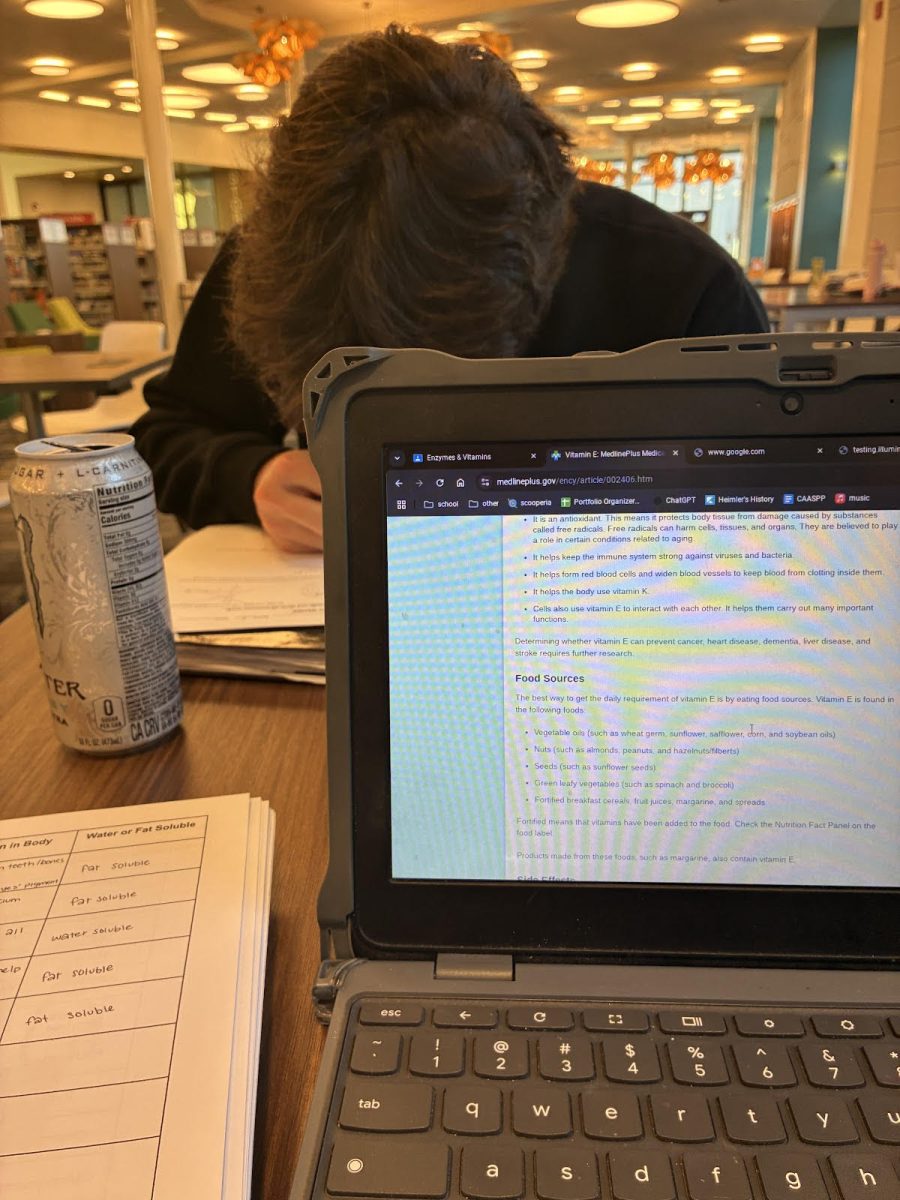









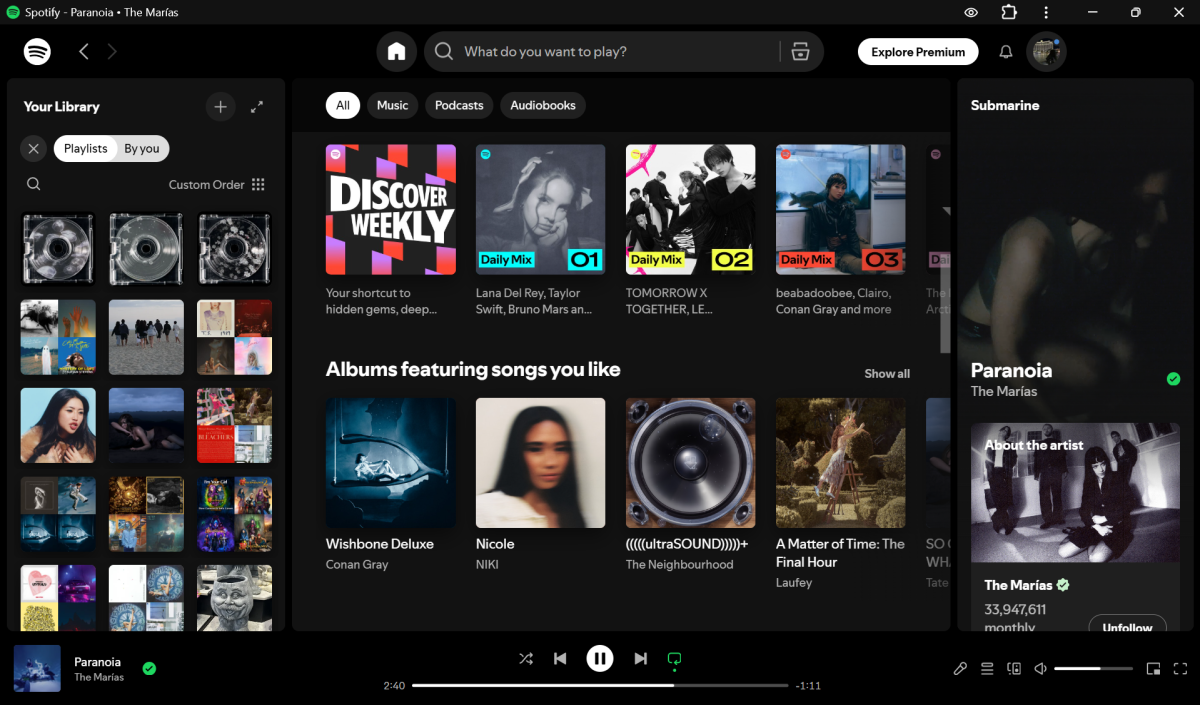













You sit down at your desk to tackle a mountain of homework after a long day at school. As you pull out your first assignment of the evening out of your backpack, you suddenly hear a ding: an Instagram notification. Out of curiosity, you open the app to check your message. Once you do, you’re presented with a plethora of short, enticing videos from all of your favorite creators. Before you know it, you scroll down a rabbit hole of videos, yet you don’t stop yourself once you’ve realized what you’re doing. It’s always “one more video,” “five more minutes,” or “I don’t have that much work tonight.”
Eventually, the evening passes this way, and you don’t complete what you actually need to accomplish until late at night. As you reflect on the hours of scrolling, you realize that you didn’t truly learn anything useful. Although you know it’s unproductive and horrible for your mental health, the cycle keeps on going. At the same time, it feels like it really should be easy to break out of it. However, social media is designed to keep the human mind hooked, and is closely tied with humans’ evolutionary instincts.
Scrolling triggers dopamine, the pleasure and reward area of the brain. While scrolling doesn’t exactly feel like a rewarding experience, the fact that you’re aware that the next video could be even funnier or more engaging than the last keeps you stuck on the app. On top of that, social media apps include algorithms that are programmed to keep you for as long as possible. By tracking usage, such as the kind of posts that you interact with, the type of profiles you click on, and even the clips that make you close the app, the algorithm is slowly—but surely—tailored to your interests.
Even though scrolling may seem like a relatively harmless action, it can alter the way you think. According to The Ohio State University, scrolling can “alter how the brain weighs risks and rewards.” Additionally, it might make people more prone to “chase instant gratification” and spark “faster decision making, suggesting more impulsive choices”(OSU). Furthermore, the Newport Institute details that the effects of scrolling can even deregulate the nervous system (Newport Institute).
From the hours lost and research complete on the harmful effects, it is evident that scrolling needs to be handled with care. While it can help with staying up to date with your friends and the latest trends, it can eventually spiral into a never-ending cycle. However, it’s completely possible to prevent this from occurring. There is no “one size fits all” when it comes to breaking the habit, nor will it feel easy—but there are numerous places to start.
Firstly, being cognizant of the amount of time spent on social media and its effects is already a big step. Simply knowing that overuse could spiral into a bigger issue makes you think before opening certain apps. Additionally, setting aside time to scroll is much more mindful than opening Instagram or TikTok when you’re bored—it doesn’t cut into any work, since the time was set aside.
Keeping the phone in a different room may discourage any pickups—for example, leaving your phone in a room other than your bedroom on a weekend would be a great place to start because it prevents morning scrolling altogether.
Angeline Han (10) mentions how her “#1 method of stopping doom scrolling is setting timers on social media apps and making sure [her] phone isn’t near [her] when [she’s] working.” Cindy Li (10) uses slightly different methods that work better for her: “usually I just turn off my phone and try to focus on the task at hand while listening to music or if I just want to stop in general, I have an app called Opal that limits screentime on certain apps like Instagram and Tiktok.”
Undeniably, there are numerous ways to limit scrolling, and not everyone uses the same methods. Although social media is tailored to human nature, it’s completely possible to break the cycle. It takes some time and discipline, but the hours it saves makes it worth it in the end.

Talia Chavez • Oct 23, 2025 at 7:58 AM
I defiitley need to break my habit of doom scrolling. Thanks for all the tips, I will definitely be using these!
Riyanka Shah • Oct 23, 2025 at 7:57 AM
This was such a great article about the habits of scrolling and he habits of social media. I enjoyed learning about this and will definitely take tips from this into my everyday habits to improve my scrolling!
Kerrine Cheng • Oct 23, 2025 at 7:56 AM
I sometimes would scroll on YouTube even though I know that it isn’t teaching me anything, and I am being unproductive. I ended up turning off my watch history, so YouTube won’t feed me videos. I think it is really helpful to have better self-control.
Noelle Wu • Oct 23, 2025 at 7:56 AM
This is definitely so prevalent in today’s day and age. I think this article could be very helpful, especially for our generation. Thank you!
Camila Padilla • Oct 23, 2025 at 7:54 AM
This was very interesting and helpful. It is so interesting to read about what so many people struggle with. Great job!
Megan Huynh • Oct 23, 2025 at 7:52 AM
Wow! This is so helpful! I will definitely consider these tips in order to refrain from going on my phone when studying.
Journey • Oct 23, 2025 at 7:52 AM
This was very informative about scrolling and why it is so addictive. I’ll definitely try putting my phone in a different room to avoid being on it!
Carey Yuen • Oct 23, 2025 at 7:45 AM
this was so informative! i think it’s so great to tackle doomscrolling since i think everyone does it. no one wants to actually do their work, so doomscrolling is their way of procrastinating.