

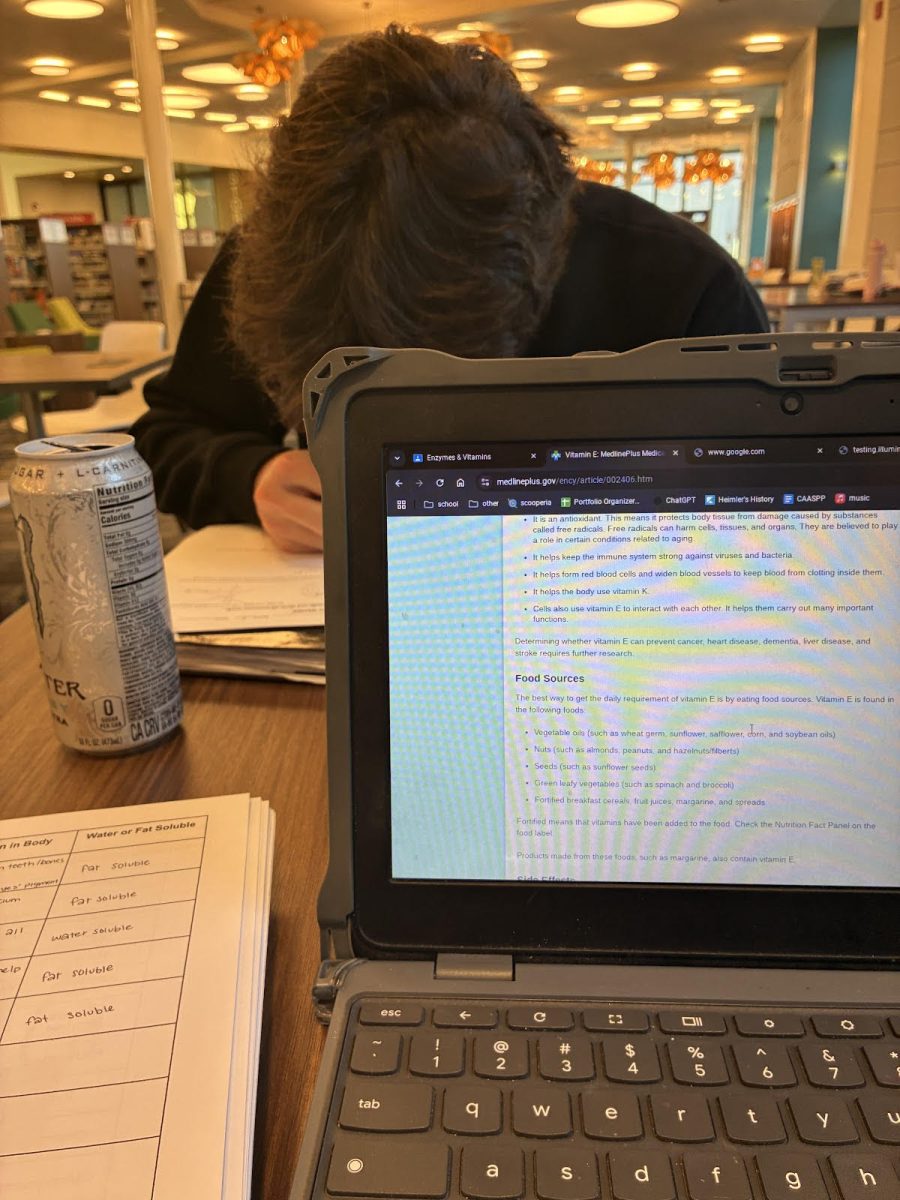





















In modern high school culture, exhaustion has become a strange badge of honor. Many students treat staying up late as a sign of ambition, boasting about how little sleep they got the night before a big test. Phrases like “I only slept four hours” are often said with pride, as if losing sleep somehow proves dedication or strength. This mindset, however, has transformed rest into something shameful—an obstacle to success rather than an essential part of it. Yet beneath the illusion of productivity lies a harmful truth: the glorification of sleeplessness is quietly sabotaging students’ health, learning, and well-being.
Teenagers today are more sleep-deprived than any generation before them. The Centers for Disease Control and Prevention reports that nearly 70% of high school students get less than eight hours of sleep on school nights. This is far below the eight to ten hours recommended by sleep experts for healthy adolescent development (CDC). Despite this, many students feel inclined to sacrifice sleep for grades, sports, or extracurriculars. Between AP courses, part-time jobs, and the pressure to build perfect college résumés, sleep often becomes the first thing to go. Over time, the lack of rest is not a sign of discipline—it’s a quiet form of self-destruction.
The consequences of sleep deprivation extend far beyond morning fatigue. Numerous studies have shown that sleep plays a crucial role in learning, memory, and concentration. In one study funded by the National Institutes of Health, irregular sleep schedules and late bedtimes were linked to lower grades and greater behavioral issues among high school students. Without enough rest, the brain struggles to store new information and focus on tasks. Students who stay up all night studying may believe they’re being productive, but their ability to think clearly the next day is severely compromised. As a result, their short-term gain often leads to long-term loss. This is further emphasized as Nolan Bent (11) details “the less sleep I get the more energy I have at the moment, but later in the day I become less energetic and I am more prone to procrastinating. On the other hand whenever I get at least 8 hours of sleep I never want to leave my bed but my day becomes way more productive and enjoyable.” Sleep is essential for well-being, so being well rested despite taking more time initially tends to be the best option to have a productive day overall.
Mental health is another major casualty of sleep deprivation. According to the Child Mind Institute, chronic lack of sleep in teens increases the risk of anxiety, depression, irritability, and even suicidal thoughts. Teenagers already experience intense hormonal changes and social pressures; adding exhaustion to the mix only worsens emotional instability. Sleep is not just physical recovery—it is emotional regulation. Without it, students are more likely to feel overwhelmed, lose motivation, and disengage from school entirely. What is often mistaken for laziness or apathy is, in many cases, the result of an exhausted mind trying to survive.
Physically, the effects are just as damaging. During sleep, the body regulates growth hormones, metabolism, and immune functions. A consistent lack of rest can contribute to obesity, heart problems, and diabetes later in life. The brain itself also suffers: studies suggest that chronic sleep loss may slow down development in areas responsible for decision-making and emotional control (The Guardian). For high school students, this means that the pursuit of “hustle” through sleeplessness doesn’t just affect the present; it can alter the course of their future health and performance.
The root of the problem lies in the social culture surrounding productivity. In high school, students often compare workloads, test scores, and schedules, turning exhaustion into a competition. Social media amplifies this effect, glorifying late-night studying and “grind” culture as signs of ambition. Many teenagers internalize the idea that success requires constant work and no rest. But this belief overlooks the biological reality that adolescent circadian rhythms naturally shift later during puberty, making it difficult for teens to fall asleep early (Mary Carskadon, Brown University). Despite this, early school start times force students to wake before their bodies are ready, creating a cycle of chronic sleep debt that no amount of caffeine can fix.
Breaking this cycle begins with changing how students define success. True productivity is not measured by how late someone stays up, but by how effectively they can think, learn, and perform. Sleep should not be treated as a luxury. In fact, it is the foundation of health, focus, and creativity. Dillon Thomas, a junior in Yorba Linda High, firmly believes that, “I can understand when a person says that less sleep makes you feel more rested but you only feel well rested at the beginning of the day. After school or by the evening you’re crashing so I believe that more sleep is better because then you feel energized all day and you can’t be 6’7 unless you sleep when you grow.” Prioritizing rest is not weakness; it is strategy. Schools can help by rethinking early start times, promoting balanced homework policies, and educating students about the importance of sleep hygiene. On an individual level, students can set consistent sleep schedules, reduce screen time before bed, and learn to manage their workload without sacrificing rest.
Ultimately, it is time to abandon the myth that less sleep equals more success. The students who rest well are not lazy—they are preparing their minds and bodies to perform at their best. In a world obsessed with doing more, the smartest move may be to stop, breathe, and rest. The “cool” thing is not surviving on four hours of sleep, rather it’s thriving because you respected your need for eight.

Tessa Kientz • Oct 23, 2025 at 8:17 AM
Loved this article, the struggle with sleep is so interesting. Loved the 6’7 joke!
Zachary Walker • Oct 23, 2025 at 7:56 AM
I think most of this late night studying comes from procrastination. When you work efficiently and early; you will have plenty of time to get 8 hours of sleep.
Carey Yuen • Oct 23, 2025 at 7:55 AM
i used to do this (not sleep) because i thought it made me cooler when i stayed up playing games with my friends. i learned quickly that less sleep actually just meant that i wouldn’t be able to pay attention in class. now i prioritize sleeping for at least 7 hours and my grades are doing so much better!!
Megan Huynh • Oct 23, 2025 at 7:51 AM
This is so relatable. I often find myself staying up very late at night doing work and losing a lot of sleep. I’ve noticed that on days I get less sleep, I feel more active but get drained throughout the day.
Peyton Rodriguez • Oct 23, 2025 at 7:49 AM
Wow, this is so cool! I hope I can be 6’7 one day too!