

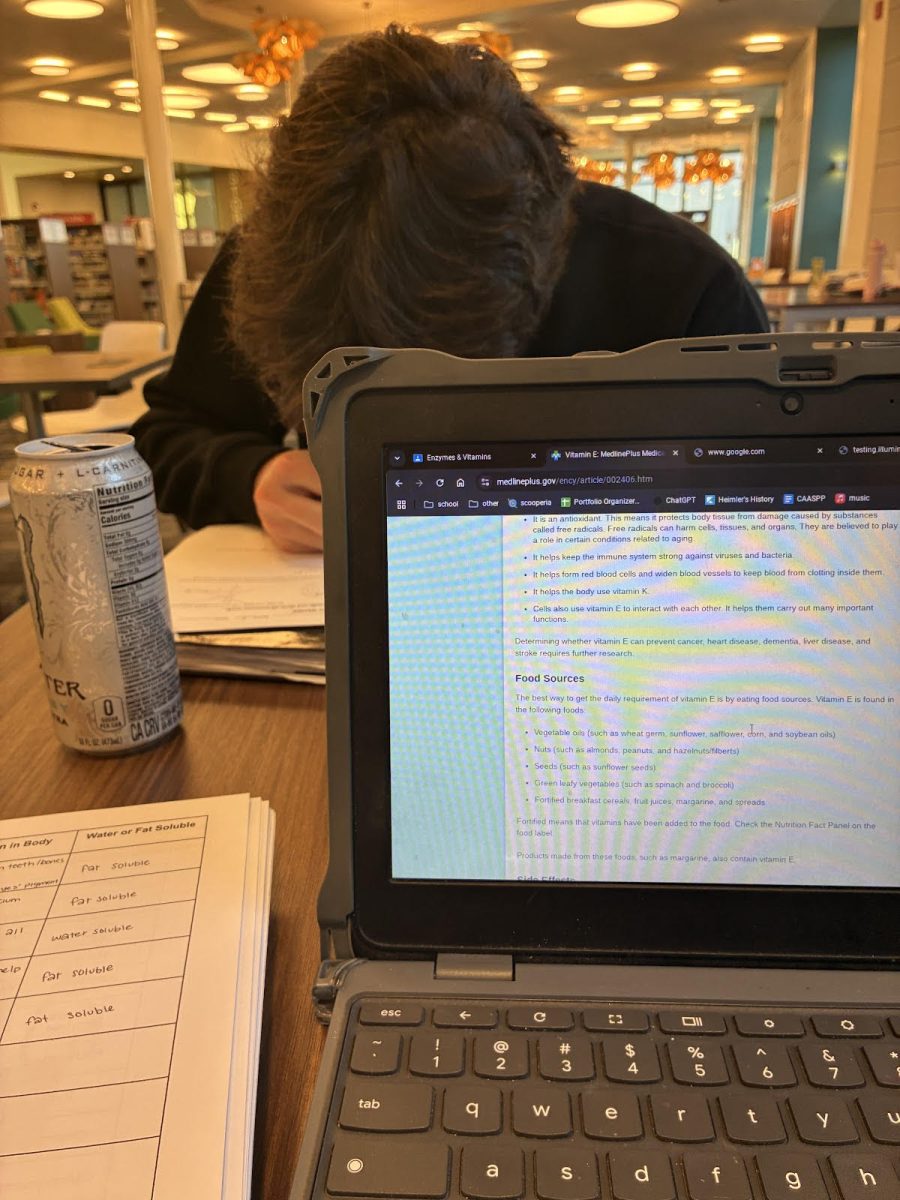























Test day is a struggle that plagues students of all grades; it’s a last-minute rush to cram in formulas and theorems, a fight between sleep and success. As midnight approaches, drooping eyelids call for bed, and sleep becomes the only priority. In the late-night dash to process pages of notes and memorize calculator functions, one question arises: Is staying up late or waking up early the solution?
When faced with last-minute cramming or simply studying the day before due to time constraints, students often look at two solutions: going to bed earlier and waking up to study closer to exam time, or staying up later while the mind is still in study mode before surrendering to sleep. So, what is the best? Are the methods better for certain students, or is one the definite best?
Sleeping late to study is supported by the experiences of Brittany Tankersley, who found it better as a result of a relaxed mindset, ease of schedule for group study sessions, and stability in timing. Following a relaxing shower and fulfilling dinner, the brain is relaxed and ready to digest information, while it may be foggy and pressed in the morning. Furthermore, more students are likely to be more open to a night study session, as a group setting uses peers’ focus to contribute to personal focus. Lastly, it ensures that the studying is done before sleeping. In the case that a student oversleeps, while she may be well-rested, she loses any time reserved for studying and comes to school even more frazzled (Baylorlariat).
When addressing her experience studying at night, Sage Li (11) believes, “I think it’s better because it’s when the world kind of calms down for me. When you wake up in the morning, you get greeted by an overwhelming loudness (could be an alarm, the sun, or whatever your heart desires). The feeling of staying awake when everyone slowly goes to sleep, but you’re still working on your own personal projects or goals, is a magical sensation that words can’t really describe.”
Besides experience, it has been proven that studying at night helps to retain information and improve recall. Studying before sleep ensures the brain is at its peak, fully integrating newly processed information; however, it must be noted that the best way to study at night is to sleep for eight to nine hours following the study session (London School of Business & Finance). This is where night studying finds its weakness: a lack of sleep can easily minimize any efforts to study the night before.
Sleep is necessary for the body to function optimally, and a change in the body’s natural sleep cycle can easily leave the immune system weaker and the body susceptible to illness. Also, the repetition of this process can easily lead to insomnia and more serious health issues. Sleep is not the only harm here, either, as the glowing computer screen disrupts melanin levels and prevents the body’s transition to sleep (Good Tutors Finder). In sleep, it’s very likely the brain forgets all the hours of studying, as there’s simply too much information to sort out in the REM phase of sleep (Ivywise). While it allows for an environment of fewer distractions and a flexible bedtime, studying at night can easily become a bad habit that spirals into something severe.
As for studying in the morning, starting the morning with the mind in top gear can set a good pattern for the rest of the day. Especially following a restful sleep and ample breakfast, the brain tends to be the most efficient in this state. The environment brings advantages, too, as morning light makes the brain naturally alert; the eyes also benefit from this, as they are not staring at the bright computer screen in the dark (London School of Business & Finance). Waking up earlier is also associated with lower depression and anxiety, two things that can easily build up with sleep deprivation (Sleep Foundation).
Gavin Esqueda (11) attests to this as he states, “I feel like waking up early is better because if you go to sleep early enough, you can let your brain refresh and be better suited to retain information as compared to late nights. Especially when there’s a lot of information you have to memorize, getting that refresh is crucial.”
Waking up early still may not be the solution for everyone. Using up energy earlier in the day leaves the body drained and likely to lose focus and be more stressed. There’s also the chance that the student is not a morning person, relying on coffee to be awake, which awakens the brain but also leaves it with the caffeine crash for the rest of the day. The alertness caused by morning light can also serve as a disadvantage, as the brain limits its creativity, something that flows freely as the mind wanders at night (Good Tutors Finder).
Overall, finding the best way to study is a matter of time, scheduling, and preferences. The past-midnight study session that gives one student a perfect score can easily tank the grade of another. The ability to process highly depends on the person and their status as a “morning” or “night” person. Both methods are worth trying, but ultimately, the best is determined by the student and the sacrifices he or she is willing to make for his or her grade.
