

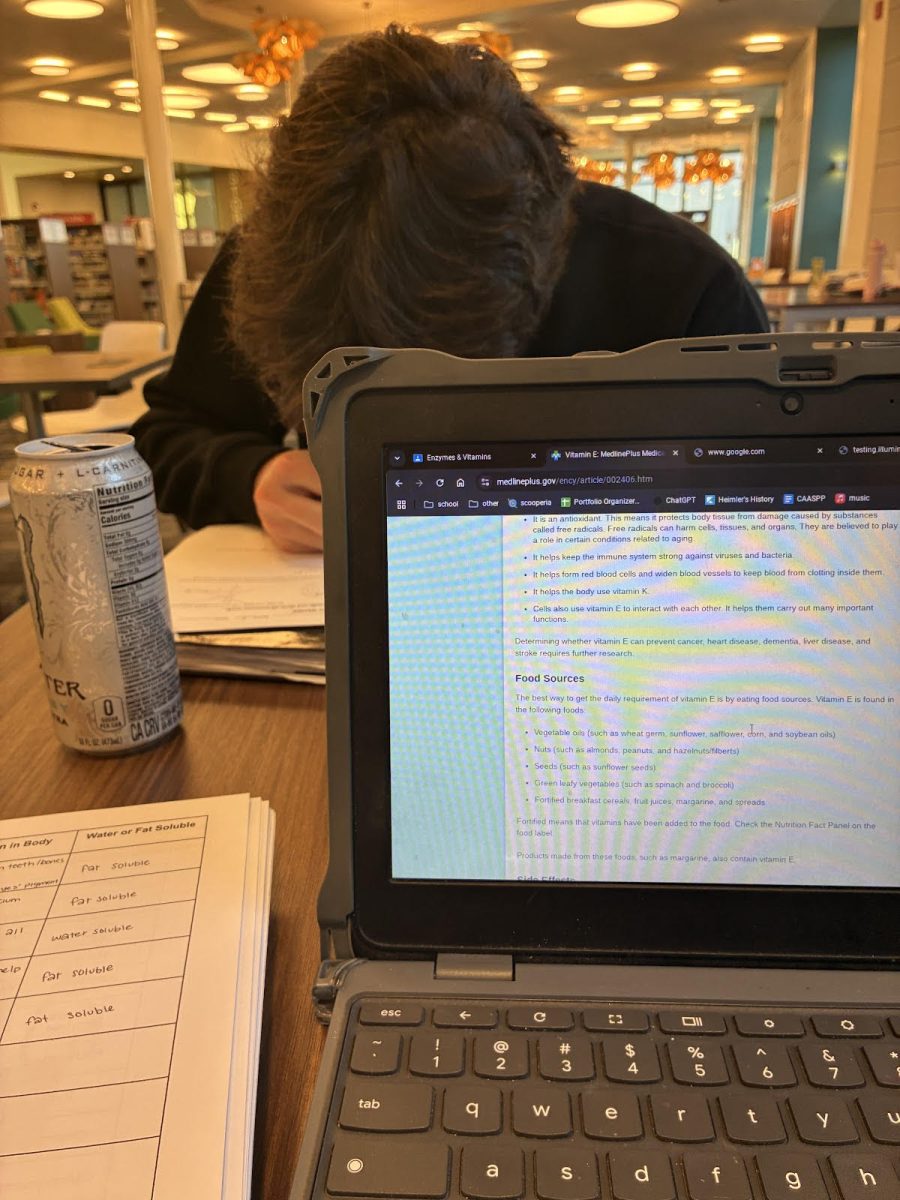






















The classroom buzzes with quiet chatter, pencils scratching faintly against the paper. Fluorescent lights hum above, casting a pale glare across the floor. Outside. A lawnmower drones faintly, the sound spilling through the half-open door. You’re sitting at your desk, but your body feels far away, but your body feels far away, like you’re looking down at yourself from the ceiling. The teacher’s voice blends with the sound of shuffling papers until it becomes distant and hollow. Your mind begins to wander to something else entirely: a memory, a thought, or an emotion that you can’t quite place. It pulls you deeper until the room around you feels distant and dull as if you’ve slipped into a reality that’s slightly out of focus.
Your body feels heavy but your thoughts float somewhere just above your head.
That quiet, disconnected feeling has a name: dissociation, and it’s more common today than people realize.
According to mental health professionals, dissociation is the brain’s way of coping when emotions or stress become too intense. It can feel like spacing out, daydreaming, or watching yourself go through motions you don’t fully control. In mild cases. It might last a few seconds, zoning out during a lecture or staring blankly at your notes. But for others, it can stretch longer and feel unsettling, as if reality itself has dulled or slipped away.
“I didn’t even notice it at first,” said Tania Contreras. “It started during exams. I’d be sitting there and then all of a sudden, I catch myself starting to drift off thinking about other things, like everything was happening in slow motion. I knew I was there, but it didn’t feel real.”
School environments can unintentionally heighten dissociation. Academic pressure, social expectations, and emotional stress all pile up, and the mind sometimes responds by disconnecting. It’s a natural defense mechanism; the brain’s attempt to protect itself from overload. But when it happens too often, it can interfere with focus, relationships, and even self-understanding. What makes dissociation both strange and frightening is how invisible it can be, to teachers, to classmates, even to the person experiencing it.
Another student shared a similar experience. “It feels like my brain just shuts the world off for a bit,” said sophomore Sofia Deguzman. “I can hear what’s happening, but it doesn’t feel real. When it ends, I have to remind myself where I am.”
Recognizing dissociation can be the first step toward managing it. Dissociation is not a sign of weakness or failure. It is the brain’s way of saying “this is too much right now.” Healing often means learning is safe to come back, to feel the world without fear. Over time, with care and support, you might find yourself not just sitting in that desk, but truly there again, whole, present, and real.
