









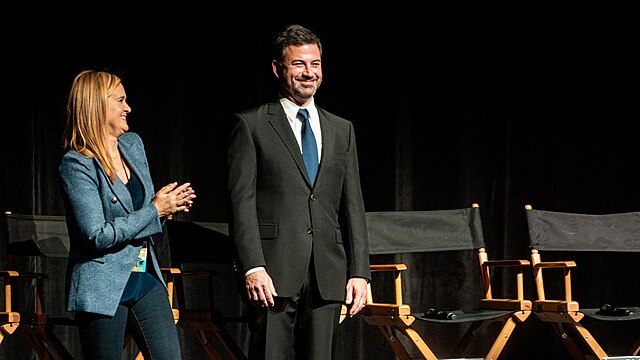
In benching Jimmy Kimmel for just under a week, ABC, Disney, and other backers exposed an important truth: in a world where we so highly value freedom of speech and expression, controversy is now often paid at the price of censorship.
After making a controversial political statement in his opening monologue on September 15th, Kimmel was told he would be indefinitely suspended from his widely known and loved late-night show, “Jimmy Kimmel Live!” Receiving pressure from the FCC and corporate concerns, ABC and Disney voiced that it would be for the better to remove Kimmel’s show from their network, in the fear that he might make another controversial or sensitive comment.
Kimmel, the media, and the people instantly reacted, providing mixed responses. Kimmel told viewers, “This show is not important. What’s important is that we live in a country that allows us to have a show like this” (CNN). This act of censorship raises the question: where is the line drawn in which the government has power to decide who voices their opinion and who does not? How far does freedom of speech really go? Is censorship always injustice? Kimmel fans and the general media responded to the cancellation with outrage and confusion. The people emphasized the power of their voice by declaring they would boycott companies such as ABC and Disney, who had suddenly dropped Kimmel. Still, Sinclair, Nexstar, and other affiliates refused to bring Kimmel back on air. Zen Bhayani (12) recounts, “It was interesting to view the many different reactions surrounding the cancelling of the show. Personally, I was shocked when I first heard, so it was interesting to hear how everyone else felt around me.”
However, eventually— with persuasion from the public and larger corporations Disney and ABC- Sinclair and Nexstar gave in, and agreed to pick Kimmel back up and resume his airing. On his first episode back, on September 23rd, Kimmel approached his audience with a sense of gratitude, passion, and emotion. After giving a large thanks to his supporters, Kimmel continued to defend the importance of free speech in media and entertainement. He claims that attempts to silence the night-time show were “un-American” and points to the deeper rooted issue engrained in the system of expression. After giving his touching monologue, Kimmel received an uproar of positive feedback from fans, complete with a standing ovation and sky-rocketing television views. While it is unclear if Kimmel faces any new restrictions after resigning with ABC and Disney, he claims it essential for him and other public figures to remain true to their opinion and freedom of speech, despite the external consequences.
On Yorba Linda High School Campus, freedom of speech and expression significantly molds the student culture and experience. Sharing differing opinions and ideas broadens students’ perception of the world, challenges their preconceived ways of thinking, and forces growth and learning. Through hundreds of impactful clubs, traditional art classes, musical productions, and Comedy Sportz matches, Yorba Linda High School is a place that fosters the creativity that only comes from true freedom to express. Chelsey Natividad (12) says “Freedom of speech and expression make us who we are. We would not be the same without them,” highlighting the profound role her voice plays in her own life.
While Kimmel is just one particular case, voices globally are constantly silenced and censored— they often just go unnoticed by the public. This single scenario sheds light on an extremely timely issue of censorship in modern society.

