

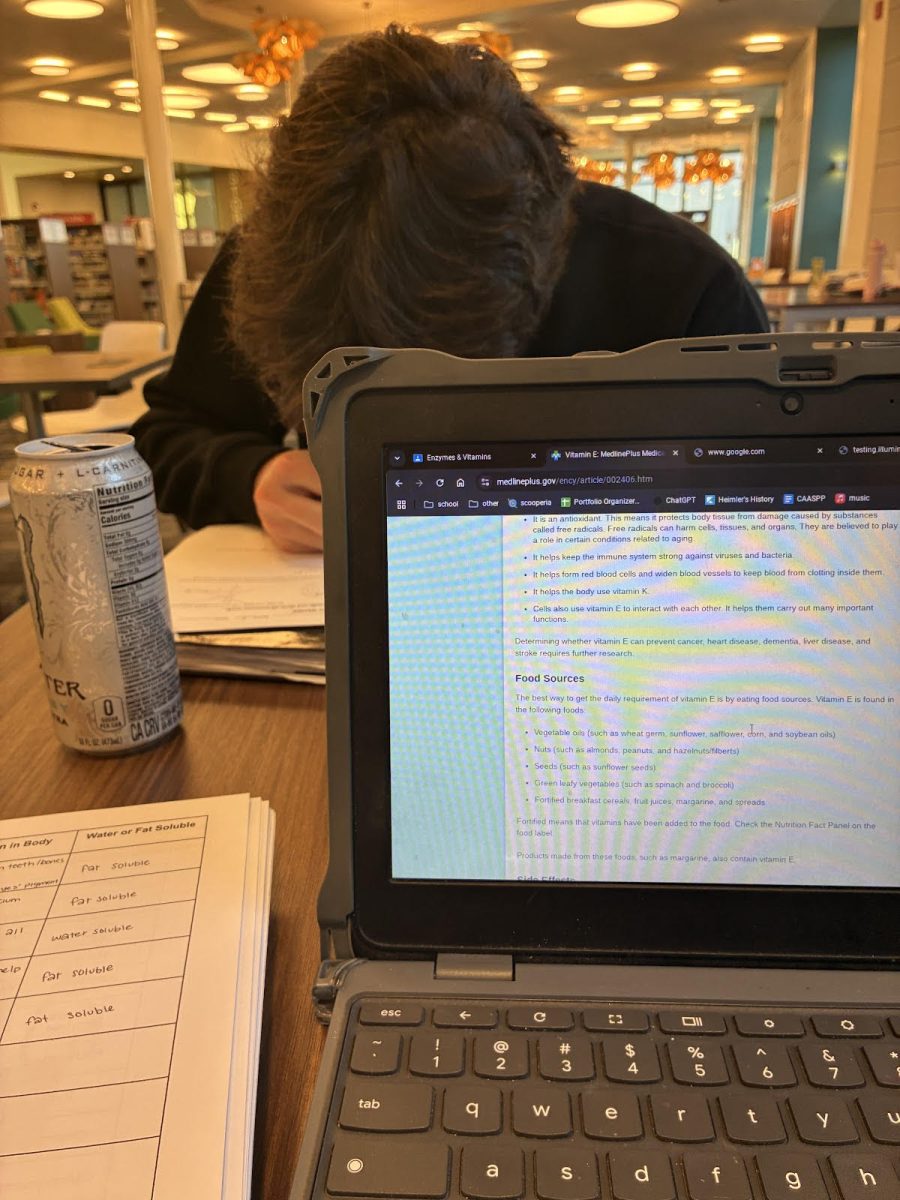











It’s 11:47 p.m. in Yorba Linda. Instead of scrolling through TikTok or Instagram, junior Haley Wong is hunched over her laptop, her screen filled with a flurry of messages in a Discord server named bio-cram. A Quizlet link flashes in the chat, followed by a hand-drawn diagram of the Krebs cycle, and a desperate plea: “Can someone explain this again?” Within seconds, a classmate responds with a voice message breaking down the concept step by step. This is no ordinary late night study grind. It’s a collaborative classroom without walls, one that never sleeps.
For years, social media has carried the blame for draining focus and shortening attention spans. Yet beneath the surface, platforms like Discord, YouTube, and TikTok are becoming virtual classrooms where students share resources, discuss complex topics, and support each other through academic challenges. But this digital shift comes with its own set of challenges.
In the bio-cram server, students aren’t just sharing notes; they’re engaging in real-time discussions, asking questions, and explaining concepts to one another. Haley notes, “It feels like stepping into a library where everyone is already at the table, but instead of silence, it’s buzzing with energy.”
This sense of community is not unique to Haley’s experience. A 2024 study by the Pew Research Center found that 83% of students aged 16 to 24 use social media for academic purposes, including researching topics, collaborating on group projects, and engaging with educational content. This statistic underscores the growing role of digital platforms in modern education.
What makes these online spaces effective is their blend of social interaction and academic focus. Study channels coexist with meme-filled spaces and casual chat, creating a balance between productivity and relaxation. During finals week, servers transform into bustling hubs of activity. Students share color-coded guides, quiz one another in voice channels, and post motivational messages to keep morale high.
Adrienna Lee, a sophomore, shares, “It motivates me to see my friends working. Scrolling through the chat and seeing everyone grinding pushes you to keep going. You realize you’re not alone.”
This integration of social media into learning environments is not just a trend but a reflection of how students are adapting to the digital age. A 2025 report from ElectroIQ highlights that nearly 93% of secondary school students in the United States used social media for academic purposes in 2020, with 45% stating that it helps them learn better.
However, the same platforms that facilitate collaboration can also pose risks. Without teacher oversight, misinformation can spread quickly. A single incorrect solution can confuse dozens of students. High-pressure moments can also tempt students to cross into cheating. Screenshots of answer keys, copied assignments, and whispered test questions sometimes appear, creating ethical dilemmas within the community.
“It depends on who is running the server,” one student said anonymously. “Some enforce rules and keep it clean. Others let things slide, and that’s where it becomes risky.”
The challenge for schools is clear: how do they support student-led collaboration while discouraging academic dishonesty in online spaces beyond their control?
Even with these risks, Discord servers teach valuable skills that extend far beyond completing assignments. Students take on leadership roles, moderate channels, design layouts, and create bots that quiz members or track deadlines. These micro-communities require teamwork, planning, and digital responsibility, skills that are increasingly important in the modern workforce.
“Social media has definitely changed the way my students approach learning,” says English teacher Ms. Zywiciel. “On one hand, they can access study guides and quick explanations instantly, but on the other, it’s a challenge to keep them from getting distracted.”
Social media has long been criticized for distracting students. These servers show that it can also foster community, collaboration, and academic success. Students are using familiar platforms to support one another, manage stress, and take control of their learning.
“It’s not just about homework,” Leah Dyo (11) says. “It’s about knowing someone else is struggling too, and that pushes you to keep going.”
Late into the night, screens continue to glow, messages continue to ping, and memes continue to circulate. Social media, once blamed for distraction, has become a tool, a community, and in many ways, a revolution in the way students learn.
