





















For the majority of teenagers, music is not background noise—it’s the heartbeat of their adolescence.
In the hallways of high school, AirPods protrude from pockets, and Spotify playlists mutter throughout the day about everyday existence. But what lies within the earbuds is more: music helps teens establish themselves. It’s a tool for discovery, rebellion, comfort, and connection. Whether it’s a pop anthem that screams self-assurance or a sad indie song that in some way “understands you,” music offers an emotional mirror.
Psychoanalysts believe that adolescence is the time of identity formation. Experts on child development describe the way “teens use music to process complicated emotions they can’t yet articulate with words. It becomes a bridge between their internal world and the external world.”
While doing interviews with students at local schools, one feels this idea to be true.
“I usually listen to music that reflects what I’m feeling inside,” says Lucy Lu (11). “Depending on my mood, I will change artists or genres. The sound or lyrics almost vocalize what I am feeling.”
Others apply music to project the individual they aspire to be. For Simran Vaswani (11), says that music allowed her to gain confidence. “I love listening to empowering music right before I have an event or outing.”
Genres can even serve as markers of identity. K-pop fans will establish online communities that become sanctuaries, and punk music can be employed to represent resistance and uniqueness.
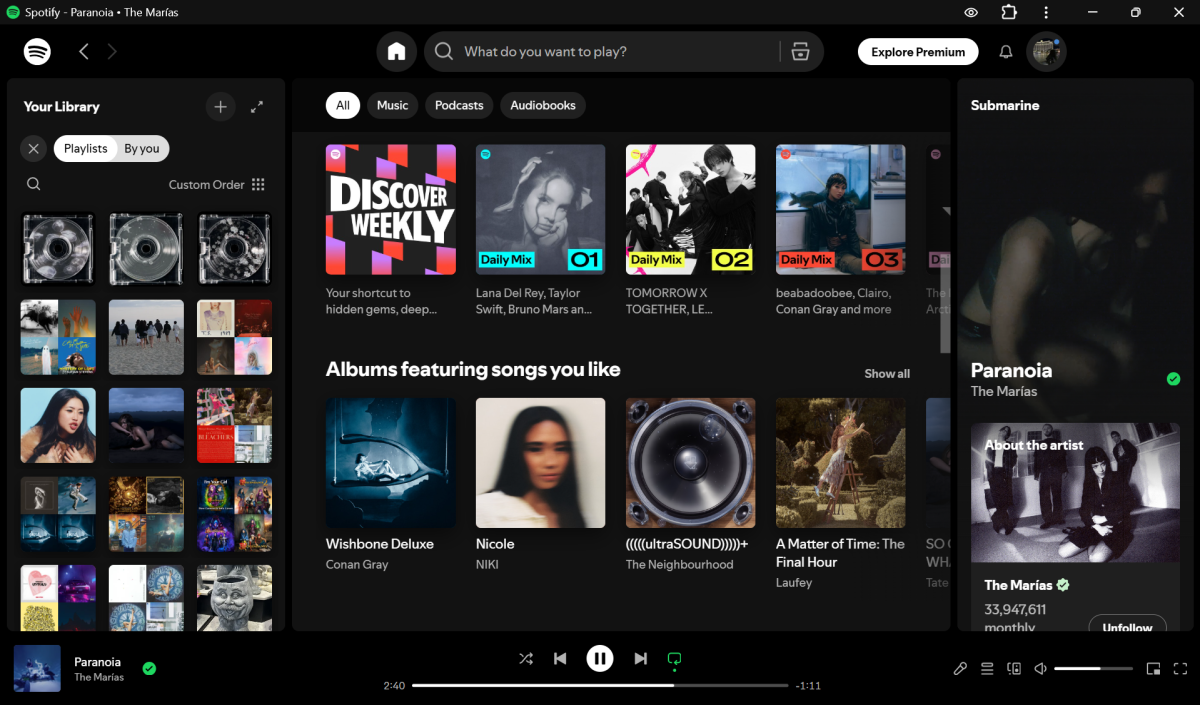
But it’s less about what teens are listening to—and more why. With digital music platforms filtering out music based on individual tastes, teens are building highly personalized soundtracks for their own lives. The “On Repeat” playlist is more than a bestseller’s list; it’s a snapshot of who they’re becoming. Music platforms like Spotify and Apple Music provide consumers with these insightful playlists as well as cumulative playlists of a specific year. For example, Spotify creates end-of-the-year playlists that wraps up musical obsessions of the year. As they are growing and navigating through life, many teens use these playlists to revisit past years as music is quite evocative of memories. Music allows teenagers to feel solace, feel empowered, or even grapple with their overwhelming emotions.
Music won’t fix everything, but for many teens, it’s where they begin looking.
