

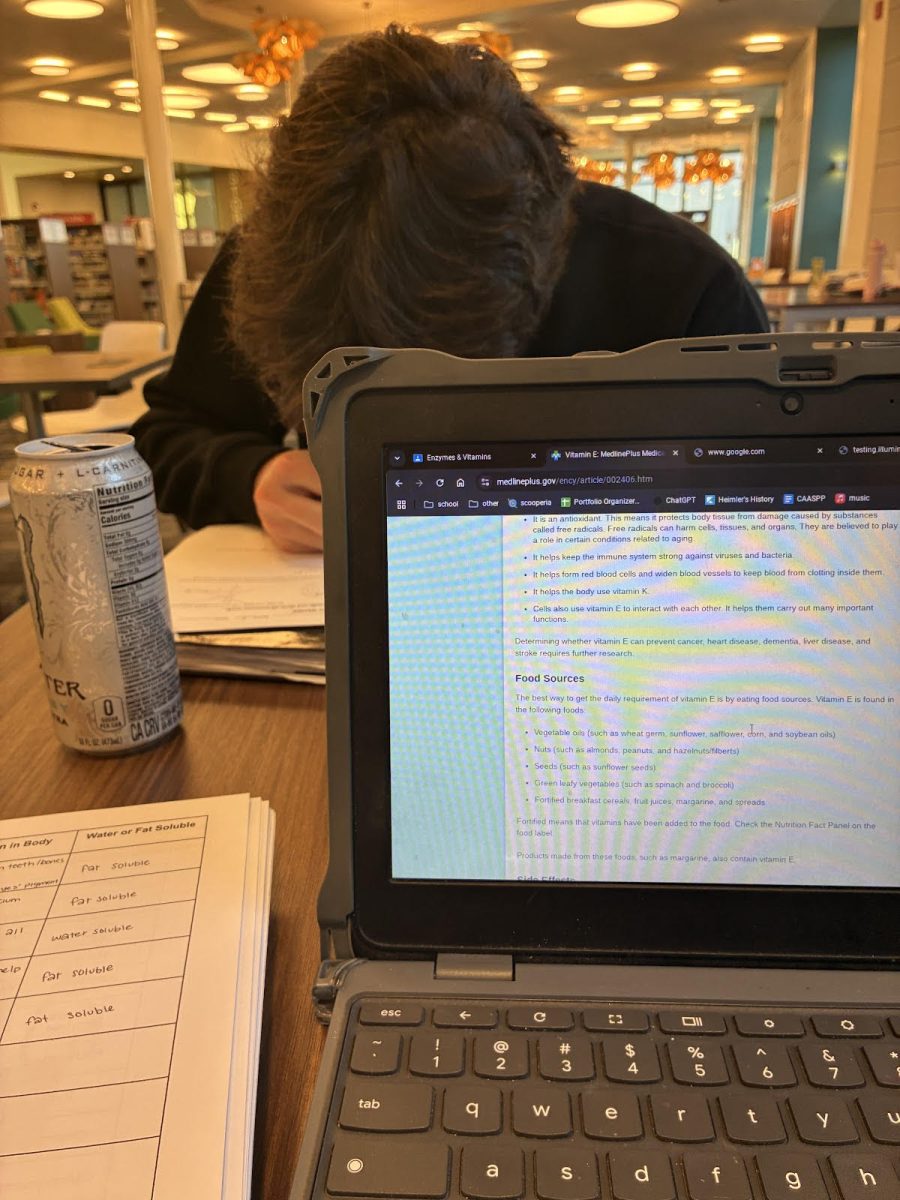





















When asked if using AI is helpful YLHS student, Ishan Jain (10) stated, “AI is a very helpful tool when studying and honestly just in general.”
Siya Batra (11) agrees with this, stating that “AI is something that I am grateful for, yet I am a little concerned about.” There’s no denying that AI is an incredibly helpful tool. Everyone uses it—whether it’s getting a little “help” on an assignment or simply asking, “What’s a good recipe for a salad?” AI has quickly become part of everyday life. But while AI makes tasks easier, it also brings major challenges—especially regarding the future. With AI advancing rapidly, some careers, and even entire college majors, are at risk of shrinking or disappearing altogether. For example, the finance industry is already transforming. Business is a broad field, but stock trading specifically is now dominated by AI algorithms. Humans simply can’t compete with how quickly and accurately AI can buy, sell, and predict market movements.
Journalism is also being affected. AI has become so proficient at writing that it can even mimic the voice of a high school student. A real-life example is Sports Illustrated, which published AI-written articles that readers later demanded be removed. Even creative fields like game development and graphic design are feeling the impact. AI can now generate professional-level art and even code complete games in a fraction of the time it would take a human. This raises a critical question: what should students major in? What careers are still safe—and even thriving—despite the rise of AI? The answer lies in choosing majors that focus on skills AI can’t easily replicate—fields that require human emotion, judgment, and connection.
Majors like law and political science remain strong choices because machines cannot argue a court case, persuade a jury, or defend someone’s rights with true human conviction. Society will always need real people to stand up for justice. Performing arts is another resilient path. While AI can mimic sounds, images, and even movements, it cannot deliver raw, emotional performances that move audiences to tears or laughter. Human stories, told by human voices, will always carry significance. Healthcare majors such as nursing, physical therapy, and medicine are also secure. Though AI might assist with faster diagnoses, no robot can comfort a scared patient, hold a hand, or provide the empathy that real healing often requires.
Engineering remains a powerful choice as well. While AI can assist in the design, it’s the human imagination, problem-solving, and risk-taking that lead to true innovation. Someone must build the future—not just predict it. The common thread among these majors is their reliance on the human spirit. They depend on qualities AI simply cannot duplicate. Humanity stands at a crossroads. By choosing majors grounded in empathy, creativity, and critical thinking, individuals won’t just survive the AI revolution—they will thrive in it.
So when planning for the future, it’s essential to ask: Will this major make a person irreplaceable? Because in a world increasingly run by machines, being human may just be the greatest advantage of all.
