
























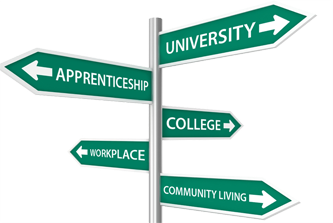
For many students, the path after high school seems clear: attend a four-year university, earn a degree, and enter the workforce. Timothy Knaw (10), a believer in the standard 4-year university route, thinks that “community colleges are a great way to save money while learning, but I believe that attending 4-year universities has greater benefits. Some being a better environment and the fact that after a year or two, you’d be familiar with a group, whereas attending a community college and then transferring misses you that opportunity.” However, this traditional route is just one of many available options. Gordon Chen (10), considering other routes, details “there are many different routes other than the standard four-year. I think if you haven’t made up your mind yet, then it is good to consider other ways.” Post-secondary education includes a variety of paths tailored to different career goals, learning styles, and financial situations. From trade schools to community colleges, understanding these choices can help students make informed decisions about their future.
Community Colleges
Community colleges offer two-year associate degrees and certificate programs in a wide range of fields. They are an excellent choice for students looking to save money on tuition, explore different subjects, or gain skills before transferring to a four-year university. Many community colleges have agreements with universities, allowing students to transfer credits easily. Additionally, community colleges often offer flexible class schedules, making it easier for students to work while attending school. Programs in healthcare, business, and technology are particularly popular, leading to well-paying jobs in growing industries. Many institutions also offer career counseling services, internship opportunities, and networking events to help students transition smoothly into the workforce (uopeople).
Trade and Technical Schools
Trade schools, also known as vocational or technical schools, provide specialized training in fields like automotive repair, cosmetology, plumbing, welding, and healthcare. These programs are typically shorter than traditional college degrees and focus on hands-on experience, allowing students to enter the workforce quickly. Many trade careers offer competitive salaries and a high demand for skilled workers. For instance, electricians and dental hygienists often earn salaries comparable to those with traditional four-year degrees. Furthermore, trade schools often have strong connections with employers, increasing job placement rates for graduates. Some programs even offer paid apprenticeships, enabling students to earn while they learn and reducing the financial burden of education (Idaaamercia).
Apprenticeships
Apprenticeships combine on-the-job training with classroom instruction, allowing students to earn money while learning a trade. Common in fields such as construction, manufacturing, and electrical work, apprenticeships are often sponsored by unions or private companies and lead to industry-recognized certifications. These programs provide hands-on experience and a direct pathway into a career, often with little or no student debt. Some apprenticeships even partner with community colleges, allowing participants to earn an associate degree while working. This blend of education and real-world application makes apprenticeships an attractive alternative to traditional higher education. Additionally, many apprenticeships guarantee full-time employment upon completion, providing a stable career path (nextsteps).
Military Service
For those interested in serving their country, the military provides education benefits, career training, and opportunities for advancement. Such programs can cover tuition costs for service members, allowing them to pursue higher education during or after their service. Additionally, military careers provide leadership experience and technical training applicable to civilian jobs. The armed forces also offer specialized training in fields like cybersecurity, aviation, and medical services. Veterans often transition into high-demand careers after completing their service, and many employers value the discipline and problem-solving skills gained through military training. The military also offers tuition assistance programs for active-duty personnel, making it easier to gain an education while serving (nextsteps).
Gap Years and International Study
Some students choose to take a gap year to travel, volunteer, or gain work experience before committing to further education. Studying abroad can also provide valuable cultural and language skills that enhance career prospects. Many international universities offer affordable degree programs, sometimes at a lower cost than domestic institutions. For example, countries like Germany and Norway provide free or low-cost tuition for international students, making studying abroad a viable and cost-effective alternative. A gap year can also help students develop independence and clarify their career goals before making a long-term commitment to a specific field of study. Many structured gap year programs exist, offering students mentorship and opportunities to gain professional skills before returning to school (phoenix).
Entrepreneurial and Self-Guided Education
For those with a strong passion for business, entrepreneurship provides a viable post-secondary path. Starting a business does not necessarily require a college degree, as many successful entrepreneurs have demonstrated. Instead, aspiring business owners can learn through self-guided education, mentorships, and real-world experience. Many online resources, including business courses, startup incubators, and networking events, provide essential knowledge and connections. Programs like the Small Business Administration (SBA) also offer guidance and funding opportunities for young entrepreneurs. Additionally, crowdfunding platforms and venture capital opportunities make it easier than ever for young business owners to secure funding and bring their ideas to life (onegoal).
Making the Right Choice
The right post-secondary path depends on a student’s career goals, financial situation, and personal interests. While a four-year university remains a great option for many, exploring alternatives can lead to rewarding careers without the burden of heavy student debt. Students should consider their interests, job market trends, and financial factors when making decisions. Researching various programs, speaking with professionals in different fields, and trying out internships or job shadowing can help provide clarity. Financial aid options, such as scholarships, grants, and work-study programs, should also be explored to minimize costs. By understanding all available options, students can make choices that best align with their aspirations and future success.

Kaylee Garcia • Feb 27, 2025 at 7:25 AM
I am considering taking a gap year and studying abroad so the information you listed is good to know.
Riyanka Shah • Feb 27, 2025 at 7:25 AM
This is such a great article! I didn’t know there were so many options after high school.
Carey Yuen • Feb 27, 2025 at 7:19 AM
its nice to learn about other alternatives beside regular four year colleges